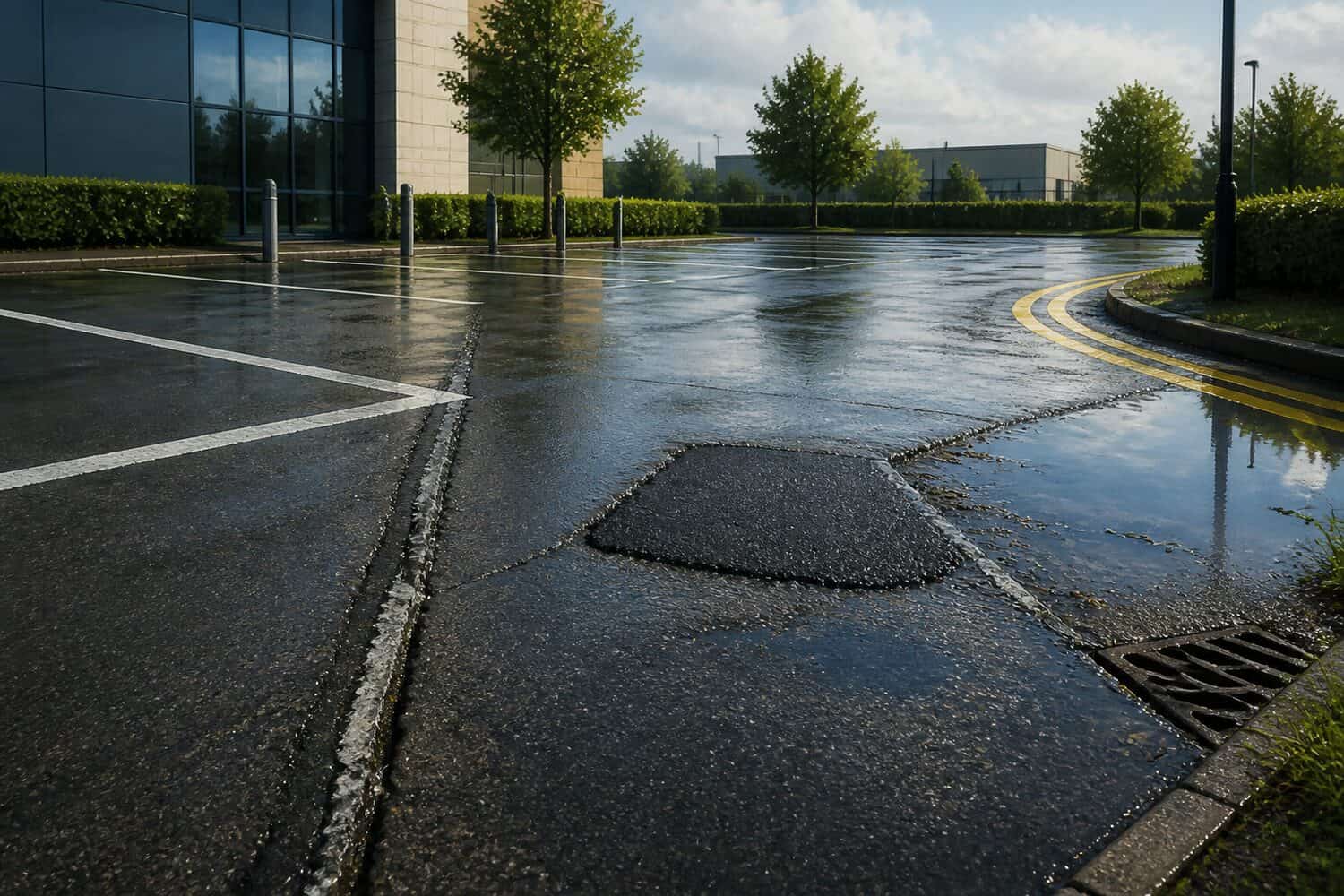

Patching looks cheaper. For a while it is. Then the same bays fail again, the complaints come back, and you are paying for the same square metres three winters running.
This page is for facilities managers, landlords, estate managers and site owners who are stuck between another round of pothole repairs and a full resurface. No prices here (that is always POA after a proper survey). Just a clear way to decide which route actually protects the budget and the reputation of the site.
When patching still makes sense
Repair is the right call when the failure is local, not systemic:
- One or two isolated potholes with a sound base around them
- Recent surface overall, with damage from a single load or spill
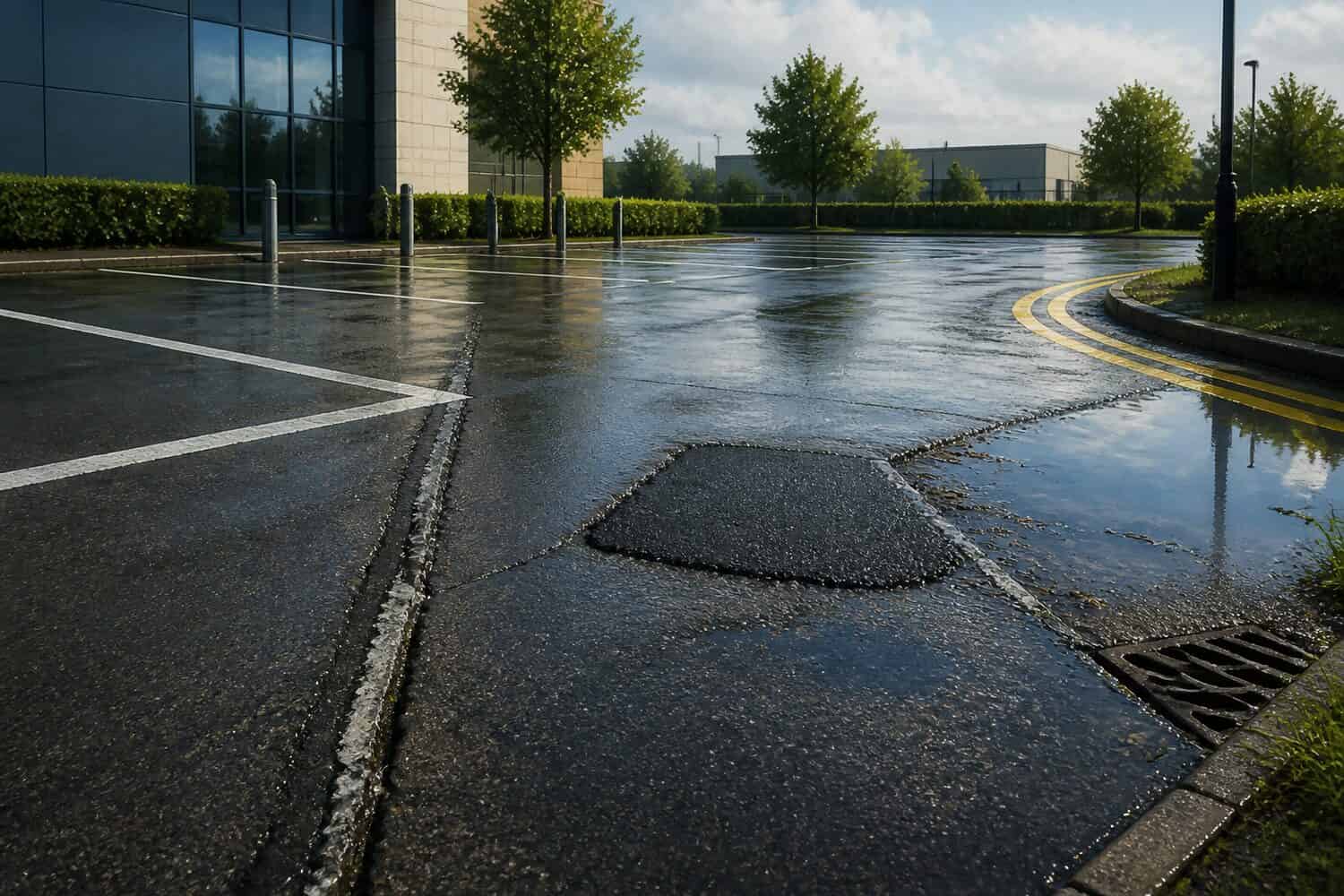
- Drainage and falls still working; no ponding across bays
- You are buying time until a planned resurface in a known window (for example next summer holiday)
A good patch restores the ride and keeps water out of that spot. It does not fix a worn out surface that has reached the end of its life.
When resurfacing is the cheaper decision
Resurface when the pattern is the problem:
- The same areas have been patched before and are opening up again
- Cracking, fretting or polishing across large zones, not just one bay
- Ponding after rain, soft spots, or a base that has moved
- Heavy vans and lorries using the park daily and the surface no longer copes
- Patch spend over two or three years is climbing toward the cost of doing the area once, properly
The cheap fix is often the expensive one. A car park patched three times costs more in lost trade, complaints and reputation than doing it once, properly, with the right prep.
How long do patch repairs last?
Honest answer: it depends on the cause.
- A well cut and sealed patch on a sound base can last years.
- A patch over a failed base, poor drainage or a surface already at end of life often fails within months, sometimes the first hard winter.
If you are asking how long a patch will last, also ask why that hole formed. Without that, every repair is a guess.
Signs you are in a false economy
- You have a standing order with a patch crew every winter
- Staff or tenants complain about the same bays repeatedly
- Trip and liability concerns keep landing on your desk
- Quotes for "just the bad bits" keep growing as more bays fail
- You cannot plan the site calendar because the surface dictates emergency works
At that point you are not maintaining the park. You are funding a slow failure.
What a proper decision looks like
Before you choose repair or resurface, a competent survey should check:
- Surface condition across the whole area, not only the obvious holes
- Base and soft spots under the failed areas
- Drainage and falls (water is what kills most short lived patches)
- Traffic (cars only vs vans, deliveries, refuse, fire access)
- Access and phasing so work can keep the site usable where possible
Fixed price after survey is reasonable to ask for. What can change the price is hidden base failure, drainage work or scope you add once the old surface is up. A straight contractor will say that up front.
Keeping the site open
Resurfacing does not have to mean a full shutdown. On many commercial sites work is phased by bay, wing or zone, timed around peak hours, deliveries and term times. "Done without disruption" is a planning problem, not a slogan: sequence the works so life keeps moving.
If your contractor cannot explain how they will keep access for users, ask again before you sign.
Repair vs resurface: a simple rule of thumb
- Isolated damage, sound base, drainage OK: lean toward repair
- Repeat failures, widespread wear, ponding, heavy traffic: lean toward resurface
- Unsure: survey first, then decide with evidence
Frequently asked questions
Is it cheaper to repair the potholes or resurface the whole car park?
Repair is cheaper in the short term if failures are few and the base is sound. If you are patching the same areas every year, whole life cost usually favours resurfacing once with proper prep.
How long will tarmac patch repairs last before we resurface?
On a sound base, years. On a failed base or a worn out surface, often months. The cause of the hole matters more than the patch material.
Are we spending more by patching the same car park again and again?
Often yes. Add crew call outs, disruption, complaints and the risk of trips, and repeated patching can overtake a planned resurface without ever fixing the root cause.
Can the work be done in sections so we keep part of the site open?
Usually yes, with a clear phase plan. Ask for that plan before works start.
Next step
If you are stuck between another patch round and a full resurface, get a site survey that looks at base, drainage and traffic, not only the holes you can see. Then decide with a whole life view, not a single invoice.
MAC Surfacing works across the West Midlands and further afield on commercial and private sites, with own crews, own plant and own planing so one team owns the outcome. Enquiry after survey is the clean route if you want a clear recommendation for your site.