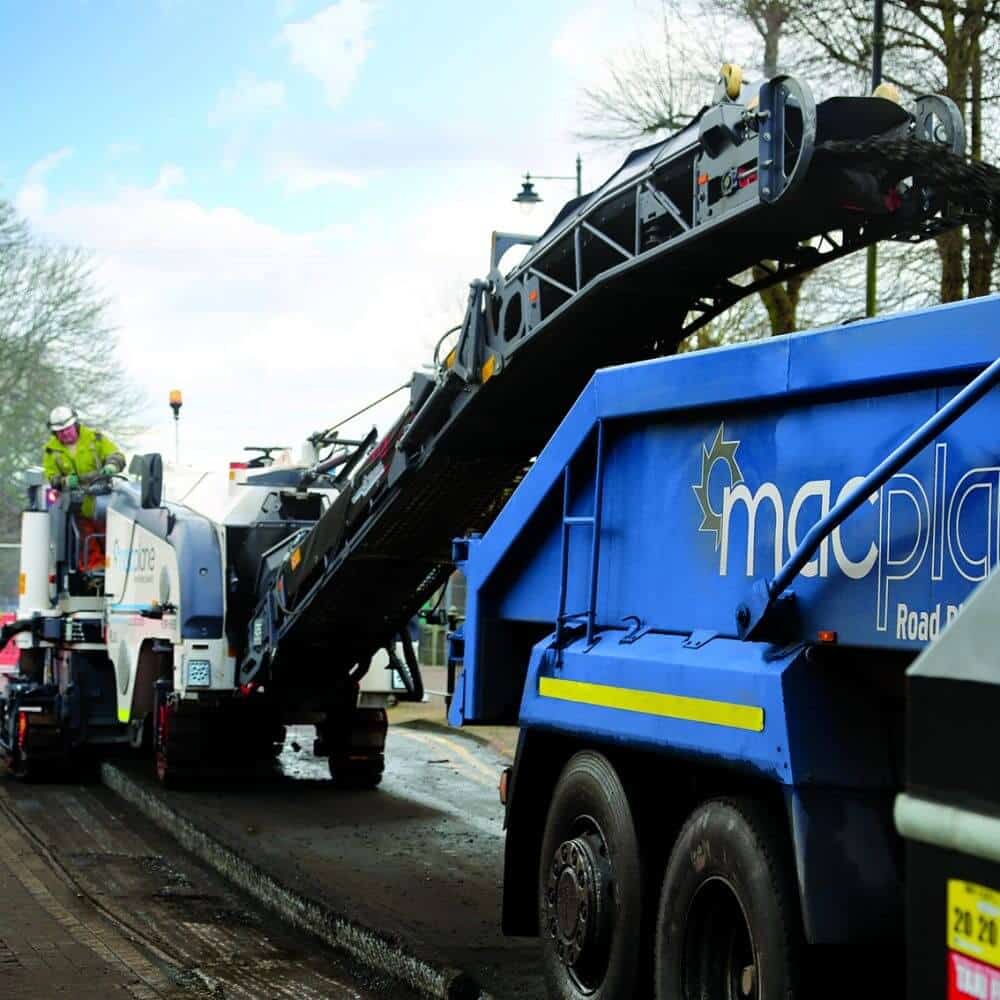

A contractor needs a mini or small road planer rather than a full width machine when the works are too tight, too detailed, too restricted or too awkward for a larger road planer to operate safely and efficiently. Small tarmac planers are often the right choice for footpaths, patching, tie-ins, trench reinstatements, car park repairs, narrow access routes, around ironwork and areas where you need controlled planing without bringing in a full width machine.
Full width road planers have their place on large surfacing schemes, wide carriageways and longer runs where productivity and output matter most. A mini planer or small road planer earns its keep where access, accuracy and control matter more than sheer volume. For hire customers and supply partners, choosing the right planer is not just about machine size. It is about matching the plant and crew to the actual constraints of the job.
When a full width planer is too much machine
A full width planer is designed for open working space. It needs room to manoeuvre, space for support vehicles and enough uninterrupted surface to make the set-up worthwhile. On a tight scheme, that can quickly become the wrong fit.
If you are working in a confined street, a private site with parked vehicles nearby, a footway, a small compound, a school entrance, a care home access road, or around live site operations, a full width machine can be difficult to position. The issue is not just whether the machine will physically fit. You also need to think about turning space, loading arrangements, traffic management, edge control and how safely the crew can work around the machine.
That is where small road planer hire becomes useful. A smaller operated planer can get closer to the work face, reduce unnecessary disturbance and help your team keep the job controlled. It is often the more practical option for shorter runs, localised defects and areas where precision matters.
What can a small tarmac planer reach that a big one cannot?
A small tarmac planer can reach areas where a larger planer cannot practically work, including narrow footpaths, tight corners, small car park bays, private access roads, service trenches, reinstatement strips, ramps, entrances, kerb lines, channel edges and areas around covers or ironwork. It can also be useful where the surface needs to be planed in sections without opening up more of the site than necessary.
On many contractor-led jobs, the challenge is not the main run. It is the awkward detail around it. You may have a carriageway patch that tapers into a junction, a footpath planer requirement alongside a kerb, or a trench that needs planing neatly before reinstatement. A bigger planer may be able to remove material quickly, but it may not give you the access or finesse needed for the detail.
Mini tarmac planer hire is often considered when the works are too small for a larger machine, but still need a proper planed finish rather than a hand-breakout approach. This can help you keep the programme tidy, reduce manual effort and prepare the surface more consistently for the next stage of work.
Footpaths, cycleways and restricted access
Footpath planer work is one of the clearest examples of where a small machine makes sense. Footways and cycleways often come with tight boundaries, kerbs, street furniture, walls, fences, gates and public access considerations. A full width machine may be excessive, even if the area looks simple on a drawing.
A mini planer can be better suited to these areas because it can work within narrower limits and help your crew manage the detail. It can also be useful on private sites where the available working area changes throughout the day, such as retail sites, estates, schools, holiday parks and logistics yards. For a contractor supplying the overall package, having the right planing support can make the difference between a smooth handover and a difficult shift.
Patching, tie-ins and trench reinstatement
Small planers are often the right choice for patch repairs and tie-ins because these jobs demand clean, controlled preparation. If the planed area is localised, bringing in a larger machine may create more disruption than the job needs.
For utility reinstatements, narrow service trenches and localised civils works, a small road planer can help prepare the surface to the required line without disturbing surrounding areas unnecessarily. Around tie-ins, the benefit is similar. You can work more closely to the edge of the repair, manage levels carefully and leave the receiving surface ready for surfacing.
This is also where operated plant matters. The planer is only one part of the hire. You need people who understand how surfacing and civils contractors work, how to fit into your programme and how to get the machine productive without creating problems for the rest of the site.
Why operated mini planer hire can be the safer choice
For many hire customers, the value is in the combination of plant and experienced operators. A small planer may look straightforward, but working close to kerbs, ironwork, live edges, pedestrians, structures or other trades still needs care. The wrong set-up can slow the job down or create avoidable remedial work.
Operated mini planer hire gives you plant with people who are used to the work. That matters when the area is restricted, when access is changing, or when the planing has to line up with surfacing crews, wagons, sweepers and site management. It also means you are not just hiring a machine, you are bringing in a support crew that understands the pressures of contractor delivery.
How to choose between mini, small and full width road planers
The simplest way to choose is to look at the working area first, then the output. If the job is wide, open and continuous, a full width planer may be the right option. If the job is narrow, detailed, short-run, restricted or close to existing features, a mini or small road planer is likely to be more suitable.
Before booking road planers, it helps to think through access width, turning space, depth of planing, surface type, loading arrangements, working hours, public interface, nearby structures and how the planed material will be managed. Clear information at hire stage helps the plant and crew arrive ready for the job, rather than adapting under pressure once they are on site.
For contractors, the best outcome is usually simple. The right plant turns up, the right people operate it and the planing works fit into your programme without fuss. That is the point of choosing the correct machine size in the first place.
The right plant for the part of the job that matters
Mini and small road planer hire is not a compromise. On the right job, it is the better tool. It helps you reach the places a bigger machine cannot reach properly, work with more control and support the surfacing or civils package you are delivering.
If you are weighing up mini planer hire for a restricted site, footpath, patching scheme or detailed reinstatement, a quick conversation about access, depth and programme can usually point you towards the right set-up.
Frequently asked questions
When should I use mini tarmac planer hire instead of a full width road planer?
You should use mini tarmac planer hire when the work is too tight, restricted or detailed for a full width road planer to operate safely and efficiently. It is often the better fit for footpaths, trench reinstatements, tie-ins, patching, narrow access routes and areas around ironwork. The choice is less about machine size alone and more about matching the plant and crew to the real constraints of the job.
Is small road planer hire suitable for footpaths and narrow access routes?
Yes, small road planer hire is well suited to footpaths and narrow access routes where a larger machine would be difficult to position or control. A smaller operated planer can work closer to the face, help limit disturbance and give your team better control in confined areas. It can be a practical choice for schools, care homes and private sites where access needs careful handling.
Can a mini planer work around ironwork, kerb lines and trench reinstatements?
Yes, a mini planer can work around ironwork, kerb lines and trench reinstatements where controlled planing is needed. It is useful for service trenches, reinstatement strips, channel edges, ramps and entrances where accuracy matters more than output. With the right operated plant and crew, you can keep the work tighter and avoid opening up more of the site than needed.
What should I consider before booking road planers for a restricted site?
You should consider access, turning space, loading arrangements, traffic management, edge control and how safely the crew can work around the machine. A full width road planer may still be right for wide carriageways and longer runs, but it can be too much machine on confined or awkward works. If the site conditions are tight, mini planer hire may give you a more controlled and practical option.
Does MAC supply operated small road planers to surfacing and civils contractors?
Yes, MAC supplies operated small road planers and crews to surfacing and civils contractors who need reliable hire support. You stay focused on delivering your scheme while the right plant and people are matched to the job. For mini tarmac planer hire or small road planer hire, you can speak to the team on 0121 522 2303 or email enquiries@macsurfacing.co.uk.