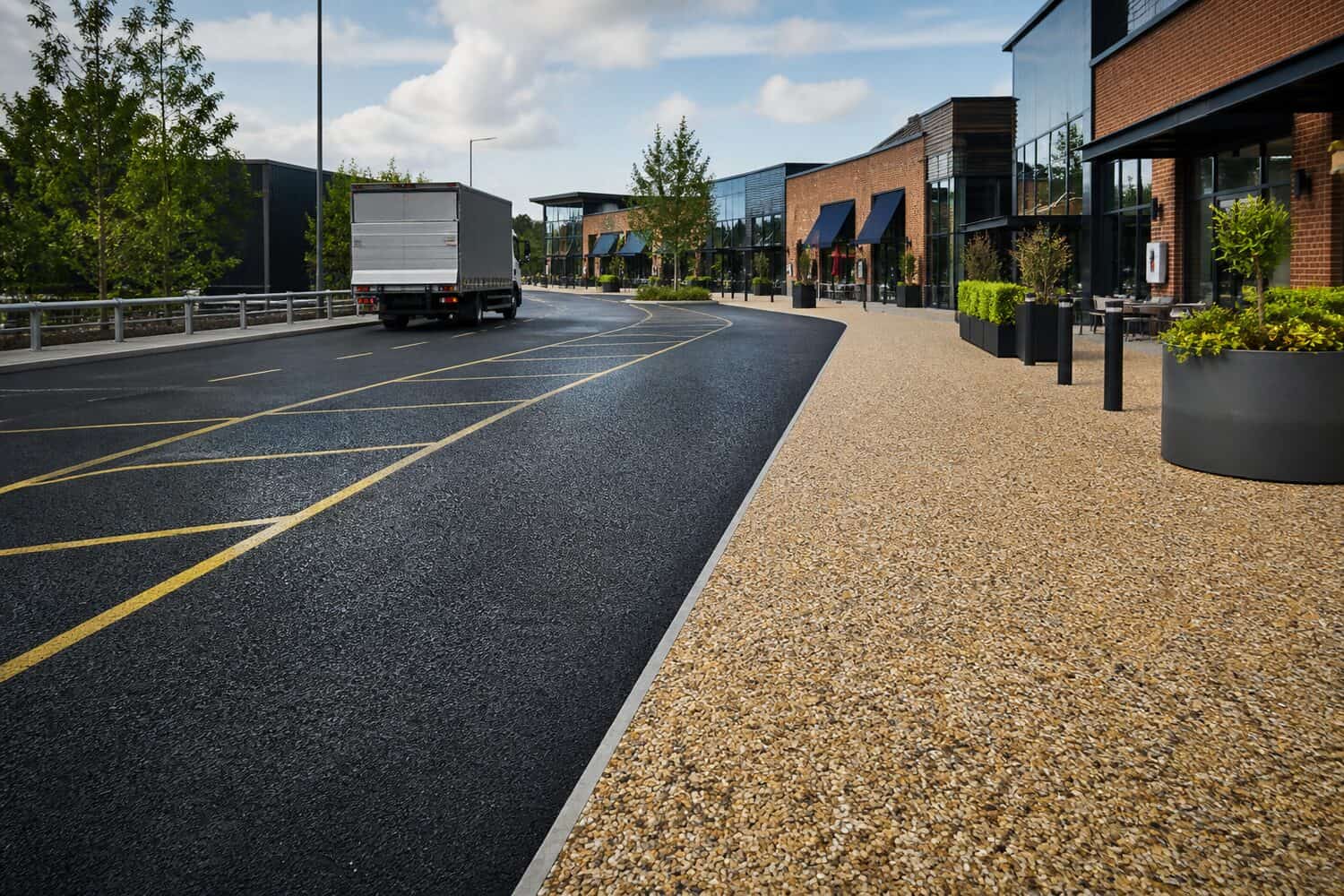
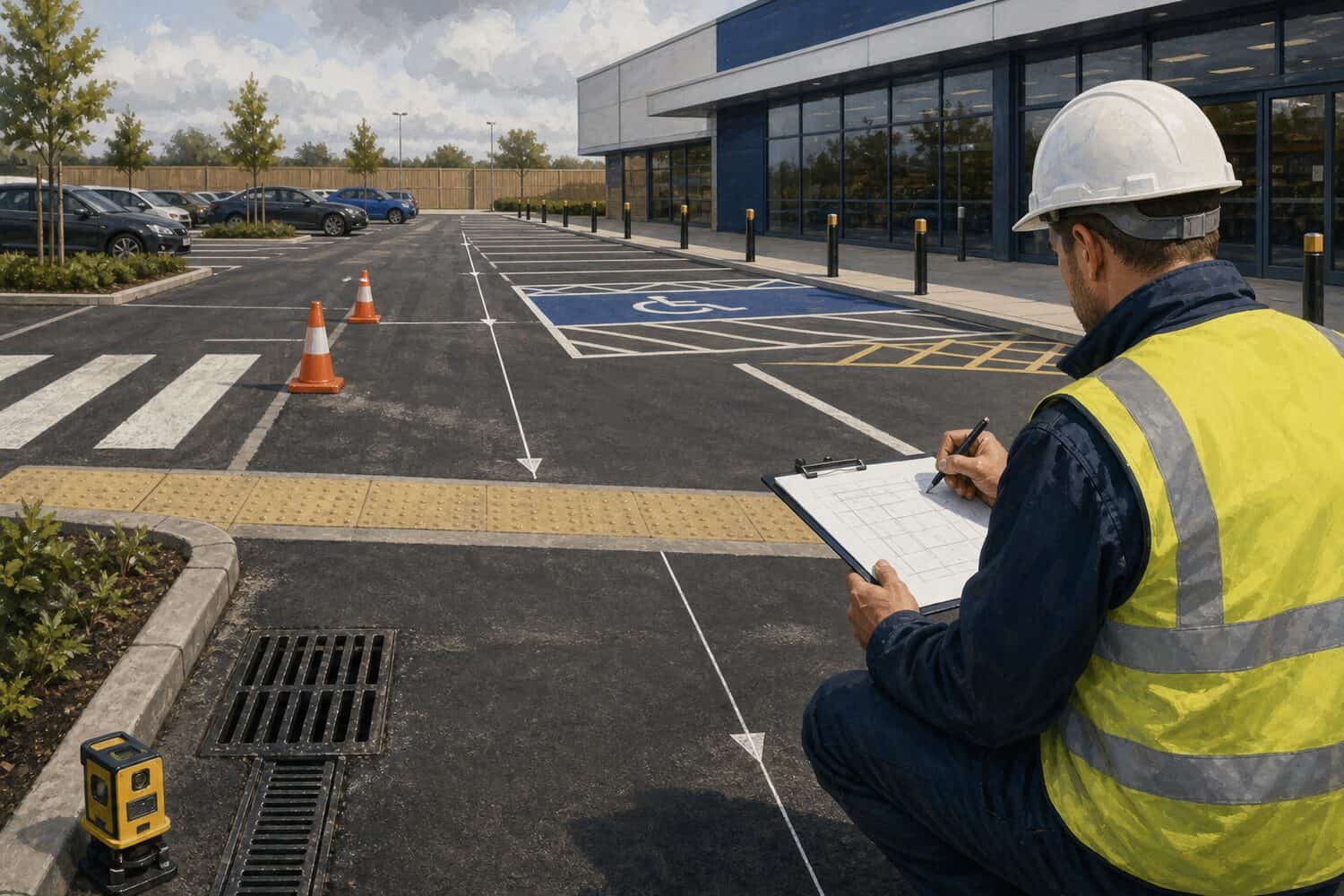

Before resurfacing a commercial car park in the UK, you should check health and safety duties, CDM responsibilities, drainage and falls, access arrangements, waste handling, existing surface condition and how the site will keep operating safely during the works. The aim is simple: understand the risks before plant arrives, plan around your users and fix the root cause rather than covering over a failing surface.
For facilities managers, estates teams and supply partners, commercial car park surfacing regulations are not just paperwork. They shape how the job is planned, who controls risk, where water goes, how pedestrians move and whether the finished surface will stand up to daily use. Done properly, the checks make the work smoother, safer and less disruptive.
Start with your legal duties, not the asphalt
Car park resurfacing regulations in the UK usually sit across several areas rather than one single rulebook. The most relevant are health and safety law, construction design and management duties, workplace access requirements, drainage rules and environmental responsibilities for waste materials.
Commercial car park resurfacing should be managed as construction work under the Construction Design and Management Regulations. The HSE guidance for commercial clients says client duties apply on every commercial project, whatever its size, with arrangements proportionate to the work and risk. Contractors and designers have their own duties too. In plain terms, the people planning the work must identify foreseeable risks, appoint competent parties, share site information and make sure the job can be carried out safely.
The Health and Safety at Work framework also applies. A commercial car park is often still live around staff, visitors, residents, deliveries, emergency access or the public. You need a clear plan for separating people from machinery, controlling vehicle movements and keeping safe routes open.
Check drainage and falls before choosing a surface treatment
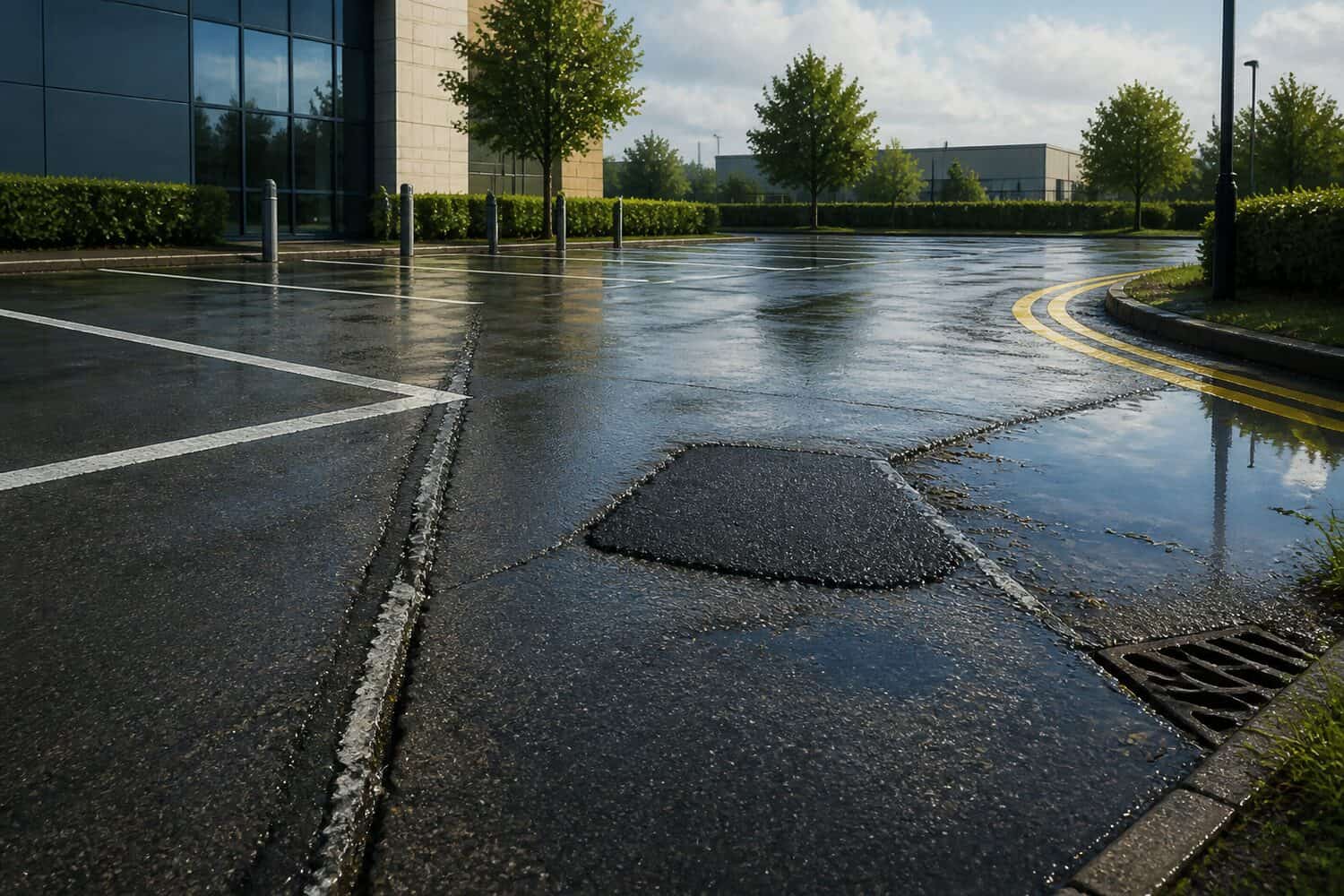
Car park drainage and falls are often where the real problem sits. If water is ponding, running towards doorways, sitting around gullies or breaking the surface at low points, resurfacing alone may not solve it. A new layer over poor falls can look tidy at first, then fail because the water has nowhere to go.
Before work starts, the site should be checked for existing levels, gullies, channels, kerb lines, soft spots and any signs that water is undermining the construction. If drainage connects into a wider system, you may also need to understand who owns it and whether any approvals are needed before altering it.
Good resurfacing starts with the route water will take. That may mean localised regulating, raising or resetting ironwork, clearing channels, repairing gullies or adjusting the planned levels so water moves away from the places it can cause damage.
Understand what is already in the ground
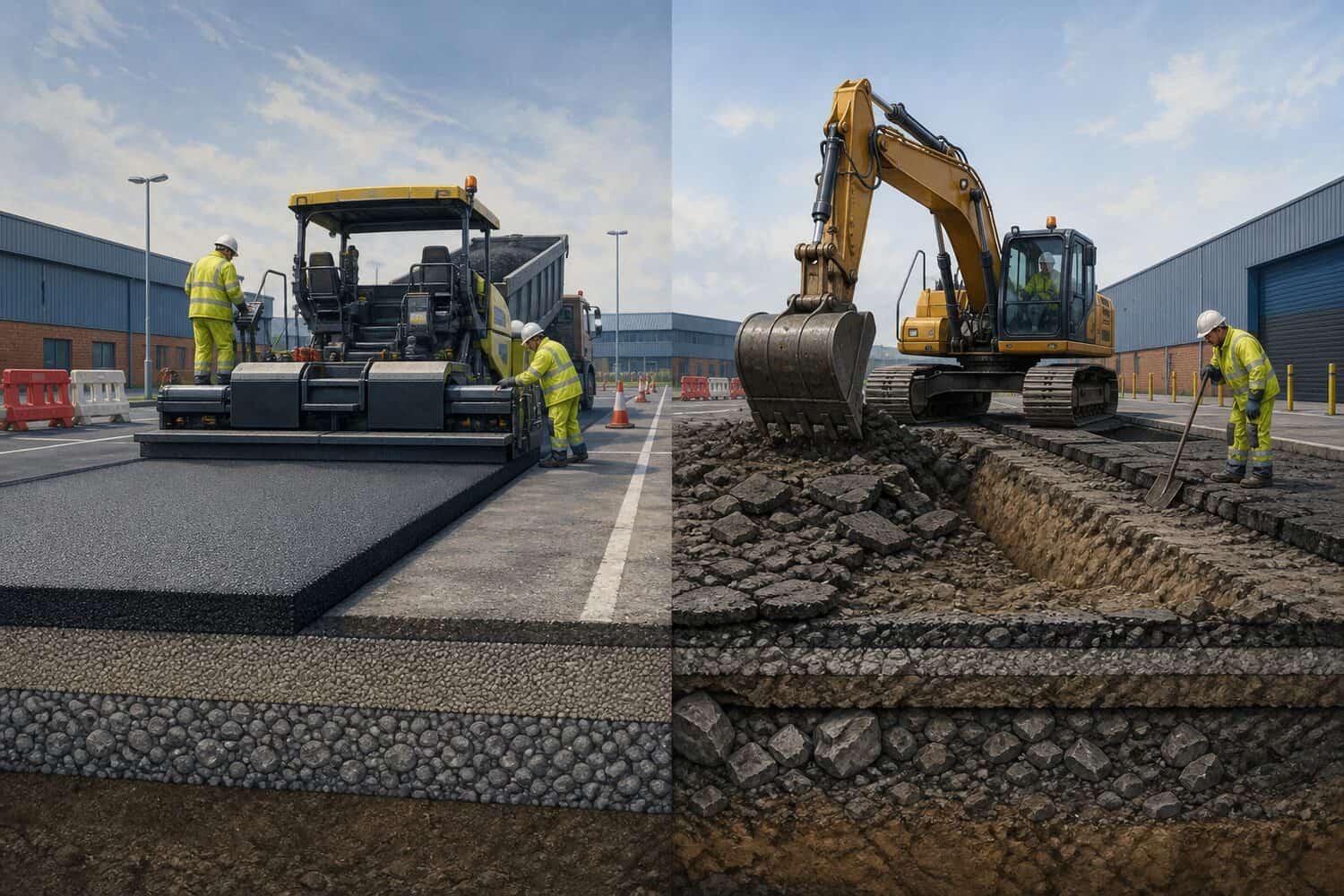
A commercial car park can hide more than a worn top layer. Old construction, patched reinstatements, weak sub-base, utility covers and historic materials can all affect the method. If the existing surface is cracked, rutted or breaking away, the cause should be investigated before a specification is agreed, and the usual reasons a new surface cracks, patches or ponds are worth reading first.
Planing, overlay, patching and full reconstruction each solve different problems, and our guide to repairing or resurfacing a car park sets out how to choose between them. If you choose the lightest treatment without understanding the defect, you may only be buying a short pause before the issue returns. Built to last means the method has to match the failure.
Older asphalt arisings may also need appropriate testing and handling. Waste should be managed through proper duty of care, with materials taken to suitable facilities and records kept where required. This is a practical compliance point as much as an environmental one.
What a facilities manager should sort before work starts
The facilities manager’s role is to make sure the contractor, or the hired plant and crew supply partner, has enough information to plan the job safely and efficiently. The better the brief, the fewer surprises on site.
- Confirm who has client duties and who is coordinating health and safety information.
- Share site drawings, drainage layouts, access restrictions and known service information where available.
- Decide whether the car park will close fully or be phased in sections.
- Plan temporary parking, pedestrian routes, delivery access and emergency access.
- Agree working hours, noise constraints and any sensitive times for the site.
- Tell staff, visitors, residents, tenants or regular users what will change and when.
- Identify barriers, signage, banksmen needs and traffic management requirements.
- Check whether permits, landlord approvals or estate permissions are needed.
- Make sure gullies, channels, kerbs and ironwork are inspected before resurfacing begins.
- Agree who signs off the finished levels, drainage performance and reinstated markings.
These checks are especially important for schools, care homes, retail and FM sites, golf facilities, estates, logistics yards and holiday parks, where closing the whole site may not be realistic. The work needs to be planned around people who still need to move safely.
Think about access, users and disruption
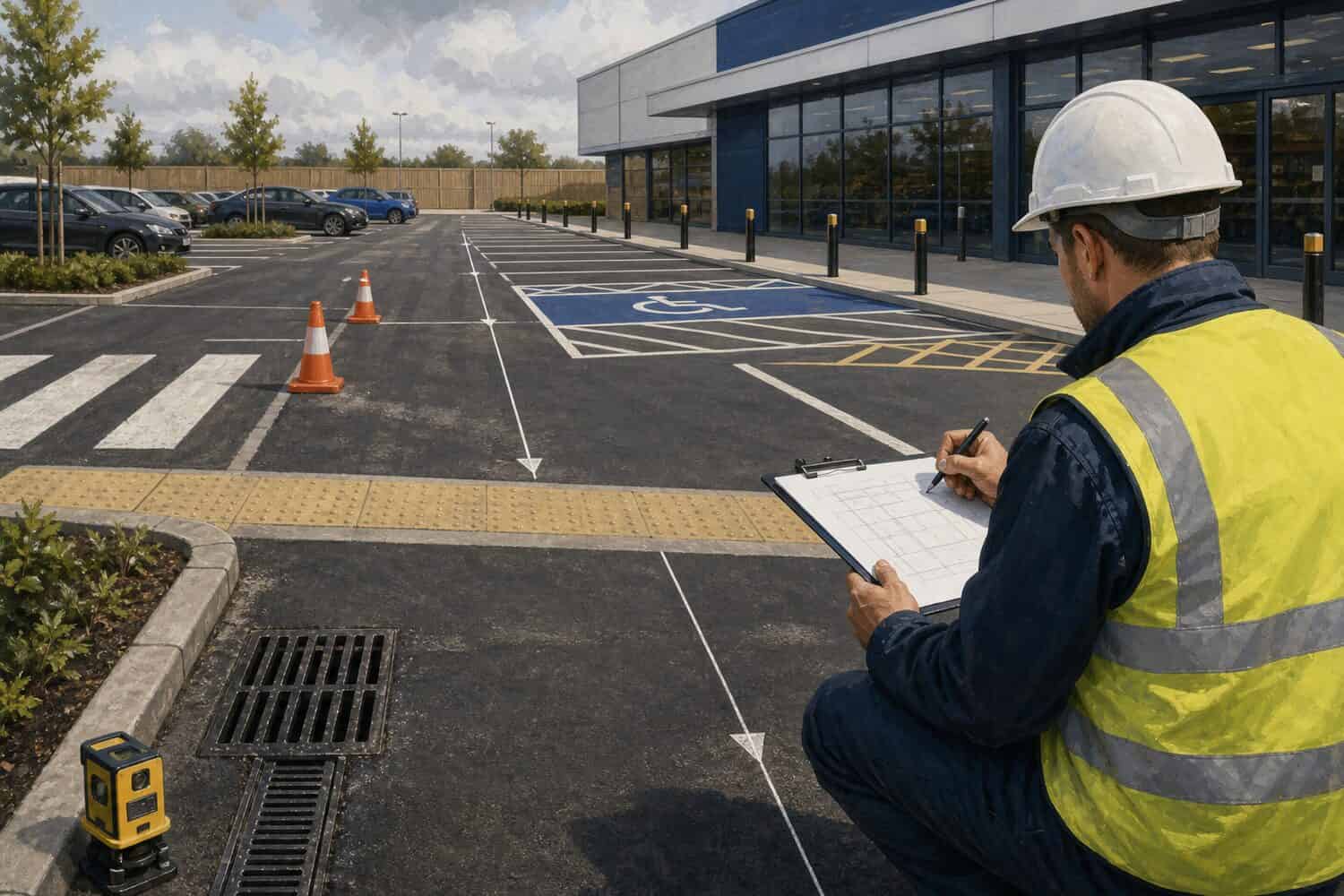
A commercial car park is not just a surface. It is part of how the site functions. Before works begin, consider how vehicles enter and leave, where pedestrians naturally walk, how deliveries are made and whether any users need accessible routes maintained throughout.
Line marking, bays, crossings, loading areas, disabled parking, walkways and signage should be reviewed as part of the resurfacing plan rather than treated as an afterthought. If the layout is already causing conflict, resurfacing is a good time to correct it.
For contractors hiring operated planer hire and labour, clear sequencing matters. The right planer, paver, roller and crew are only effective when the site is ready for them. Access needs to be clear, the programme needs to be realistic and each trade needs to know when the surface will be available.
One accountable plan makes the job easier
The most avoidable problems tend to come from gaps between survey, specification, plant, labour, drainage, traffic management and reinstatement. When responsibilities are split without coordination, small issues can become delays.
That is why many supply partners and site teams prefer one accountable plan. Whether you are managing the whole resurfacing package or hiring plant and crews to support your own delivery, the priority is the same: the right plant, the right people and a method that deals with the site as it really is.
One contractor, one solution. It keeps decisions clear, reduces handover risk and helps the work happen with less interruption to the site.
Final thought before you resurface
Before resurfacing a commercial car park, do not start with the finish. Start with why the surface failed, where the water goes, who uses the site and what must stay open while the work is done. If those points are sorted early, the regulation side becomes easier and the finished surface has a better chance of doing its job properly. Done without disruption.
Frequently asked questions
What commercial car park surfacing regulations should you check before resurfacing a live site?
You should check health and safety duties, CDM responsibilities, drainage requirements, access routes and waste handling before resurfacing a live commercial car park. These checks decide how the work is planned, how people are separated from plant and how the site keeps operating safely. They also help you fix the cause of surface failure rather than covering it with a short-term layer.
Do car park resurfacing regulations in the UK apply on private B2B sites?
Yes. Commercial resurfacing work should be managed under CDM, and the HSE says commercial client duties apply on every project, whatever its size. The arrangements should be proportionate to the work and risk. Schools, care homes, retail parks, estates and logistics sites still need safe pedestrian routes, controlled vehicle movement and competent planning.
Why are car park drainage and falls checked before choosing a surfacing treatment?
Car park drainage and falls are checked first because standing water can cause a new surface to fail if the levels or outlets are wrong. Ponding around gullies, doorways or low points usually points to a deeper issue beneath the visible surface. A proper inspection helps decide whether resurfacing alone is suitable or whether drainage, kerbs or levels need attention first.
How can a commercial car park be resurfaced without disrupting staff, visitors or deliveries?
A commercial car park can be resurfaced with less disruption by planning access, phasing the works and keeping safe routes clear before plant arrives. The contractor should agree how pedestrians, vehicles, deliveries and emergency access will be managed while the site remains live. Done without disruption starts with a practical plan, not just the surfacing date.
Who is responsible for CDM duties during commercial car park resurfacing?
On a commercial project, the client has client duties and contractors and designers have their own roles. Where more than one contractor is involved, principal designer and principal contractor appointments may also be required. The exact arrangements depend on the project, but responsibilities should be agreed before work starts rather than left between parties.