
A new surface should buy you years of quiet use. When it cracks, patches or holds water within the first winter, the problem is rarely bad luck. Something in the prep, the specification or the way the job was run did not match what the site actually needs.
This page is for facilities managers, landlords and site owners who have paid for fresh tarmac or asphalt and are now facing repeat failures, ponding or a surface that looks older than its age. No prices here (always POA after a proper survey). Just the practical reasons new surfacing fails and what to check before you pay for another round.
Cracking: what usually caused it
Cracks on a new surface almost always trace back to movement or stress the top layer could not absorb:
- Weak or wet base: surfacing over soft spots, failed patches or material that was never properly compacted
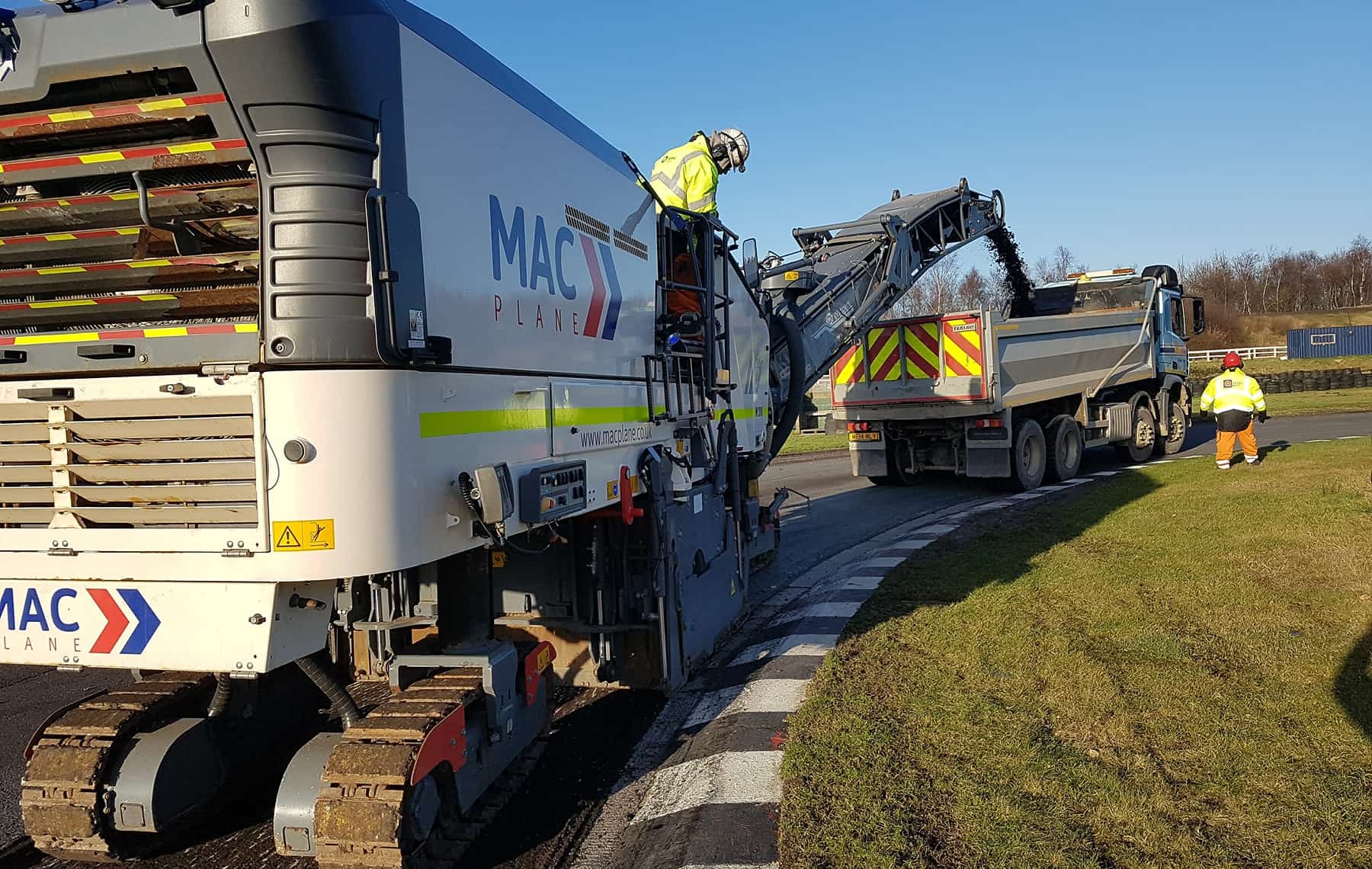
- Insufficient planing depth: a thin overlay on a tired surface that was already moving underneath
- Wrong thickness for traffic: a binder course or surface course specified for cars only, then loaded by vans, refuse and deliveries daily
- Cold joints or poor bonding: new material laid against old without a clean cut and tack coat, so the join opens under traffic
- Edge restraint missing: no kerb, channel or shoulder, so the mat creeps and tears at the margins
If the crack follows a straight line at a joint, suspect the join. If it mirrors a grid or bay layout, suspect base movement. Random map cracking often means the whole structure was under-specified for the loading.
Patching and fretting: when the surface never bonded
Loose stones, bald patches and fretting within months point to installation issues rather than wear:
- Compacted after the mat had cooled below the correct temperature window, so the aggregate never locked in properly
- Laid in rain or onto a damp base, breaking the bond between layers
- Insufficient compaction passes, especially around ironwork and transitions
- Wrong mix for the season or traffic: too open a grading for a heavily trafficked yard
A surface that polishes or sheds chippings under car wheels in the first few weeks was not finished properly. That is not something a later seal coat reliably fixes.
Ponding: a levels and drainage problem
Water sitting on a new car park after rain means falls were not achieved or drains were not cleared during the works:
- Minimum falls not set out before surfacing: the mat follows the old dips instead of correcting them
- Drains and gullies buried or blocked by overspill during laying
- Low spots at thresholds, bay entrances and around inspection covers left uncorrected
- Overlay on a camber that had already sagged: new asphalt copies the old pond
Ponding is not cosmetic. Standing water can work into cracks and joints, accelerating freeze-thaw damage and weakening the layers below. It also creates a slip risk on commercial sites. See our guide to repair or resurface decisions when ponding keeps returning in the same bays.
What a competent contractor should have checked first
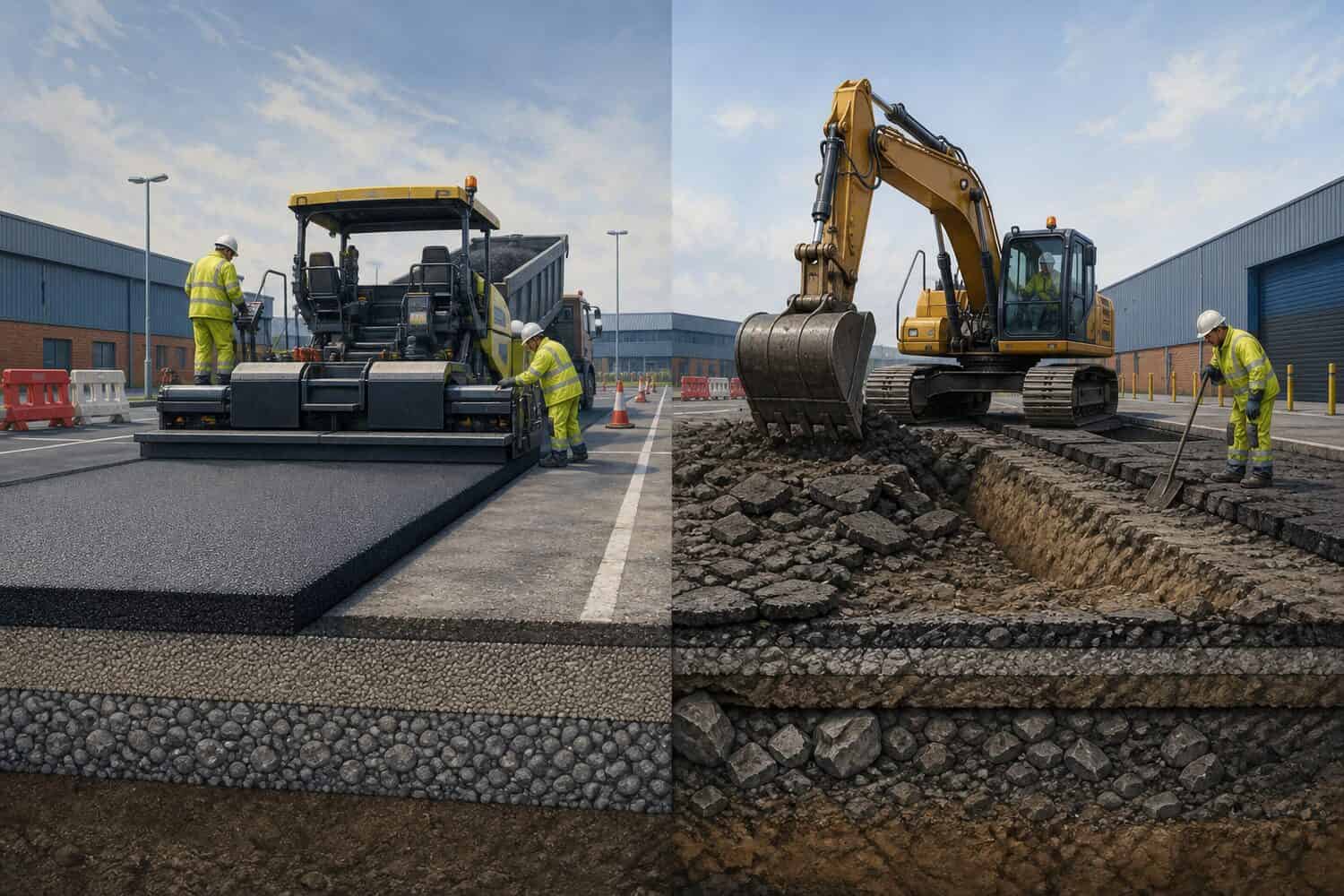
Before any new surface goes down, a proper survey should confirm:
- Full area condition, not only the visible defects
- Base stability and any soft spots under failed zones
- Drainage paths, existing falls and where water actually goes in heavy rain
- Traffic mix: cars, vans, HGV deliveries, refuse, emergency access
- Planing depth and whether full reconstruction is needed in places
- Phasing so ironwork, channels and transitions are handled in sequence
If your contractor quoted from a photo or priced only the surface layer, the failure may have been predictable. Fixed price after survey is reasonable to ask for. Scope changes when hidden base failure or drainage work appears once the old surface is up. A straight contractor says that up front.
What to do if your new surface is already failing
Document the pattern: where it cracks, where it ponds, which bays or wheel paths fail first. Photograph after rain. Note traffic types using those areas.
Before approving another patch round, ask:
- Is the base the root cause and was it tested?
- Was the specification matched to our actual traffic?
- Are falls and drainage being corrected, or only the top layer replaced?
- Who carries accountability: one contractor or several trades?
Repeated patch spend on a mis-specified job often exceeds the cost of doing the area once, properly. Whole-life cost beats another winter of reactive repairs.
Choosing better next time
The contractor selection matters as much as the material. Self-delivered crews and plant, one point of accountability and a survey that covers base and drainage (not only the visible holes) are the basics. Our checklist for choosing a surfacing contractor covers the questions to ask before you sign.
For site owners comparing repair against full car park resurfacing, the right route depends on whether the failure is local or systemic. Get evidence before you commit to another surface on the same base.
Frequently asked questions
Why has our new car park surface cracked or gone patchy?
Usually because the base was weak, the thickness or mix did not match the traffic, joints were poorly bonded, or the mat was laid or compacted in poor conditions. Cracks that follow joints or bay lines point to prep or specification issues rather than normal wear.
Can ponding on a new surface be fixed without starting again?
Sometimes local correction works if falls were wrong in isolated spots. Widespread ponding usually means levels and drainage were not sorted before surfacing. Overlaying without correcting falls often repeats the problem.
Is cracking in the first winter always the contractor's fault?
Not always. Extreme weather or unexpected loading can stress any surface. But cracking across large areas, or failure at joints and edges within months, usually indicates prep, specification or workmanship that did not match the site.
Should we patch a new surface that is failing or resurface again?
Patch when failure is isolated and the base is sound. If the same zones fail repeatedly, or cracking is widespread, patching funds a slow repeat of the same problem. Survey the base and drainage before deciding.
Next step
If a new surface is cracking, patching or ponding sooner than you expected, treat it as a specification and prep question, not bad luck. Get a survey that looks at base, drainage and traffic, then decide whether local repair or a proper redo protects the site long term.
MAC Surfacing works across the West Midlands and further afield on commercial and private sites, with own crews, own plant and own planing so one team owns the outcome. Enquiry after survey is the clean route if you want a straight view of what went wrong and what will actually last on your site.