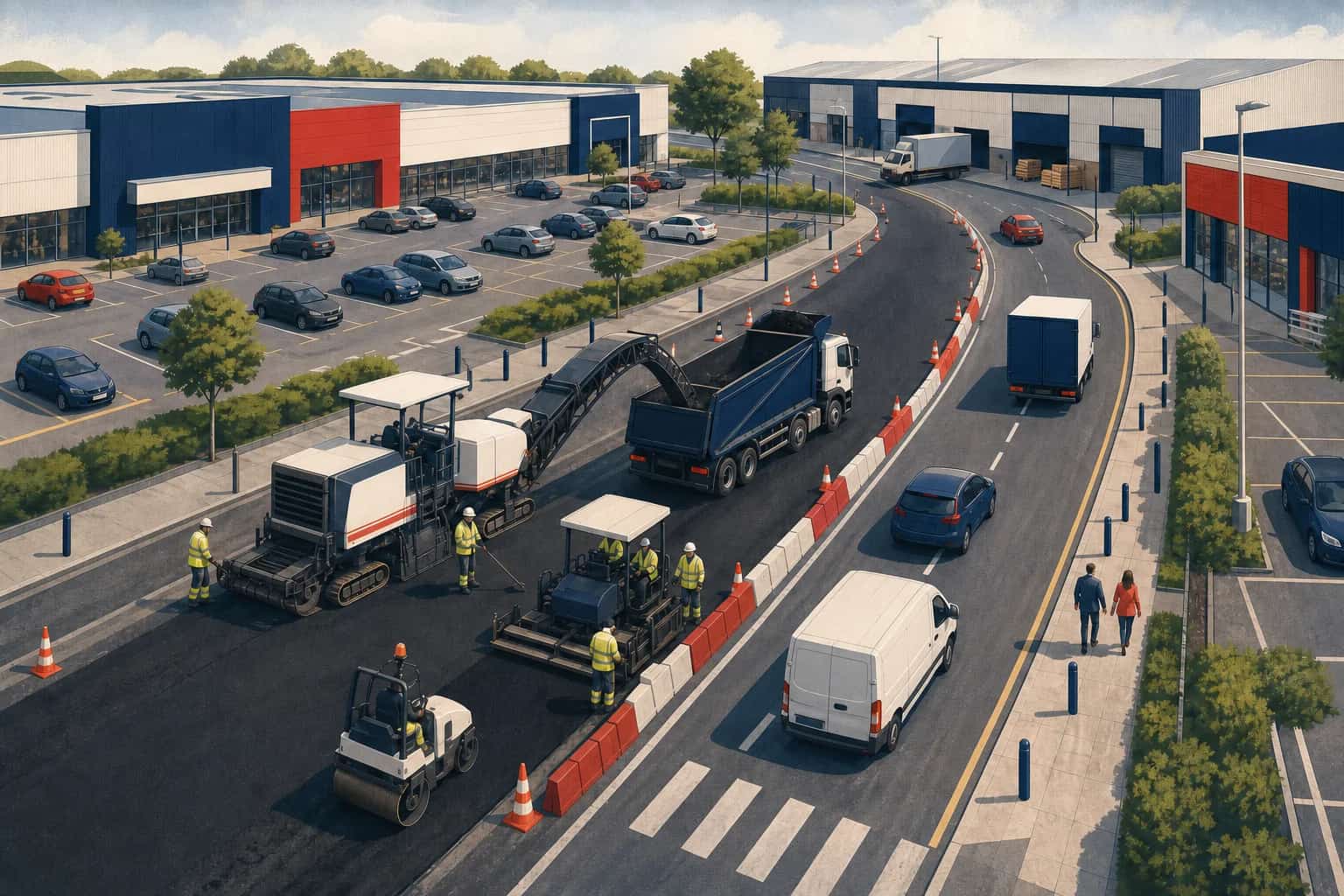

Resurfacing a live retail park or industrial estate is not just a surfacing problem. It is an access problem with surfacing in the middle of it. Customers, tenants, delivery drivers and site teams may still need to move while the work is under way. For the surfacing or civils contractor, that makes phasing, traffic control and dependable plant support as important as output.
This guide is for contractors arranging plant and labour for live commercial sites. MAC supplies operated plant and experienced crews into the contractor's agreed programme. The site plan, traffic management and work controls remain job-specific, but the hire package should help the work progress cleanly rather than add another moving part to manage.
Map the movements before choosing the plant
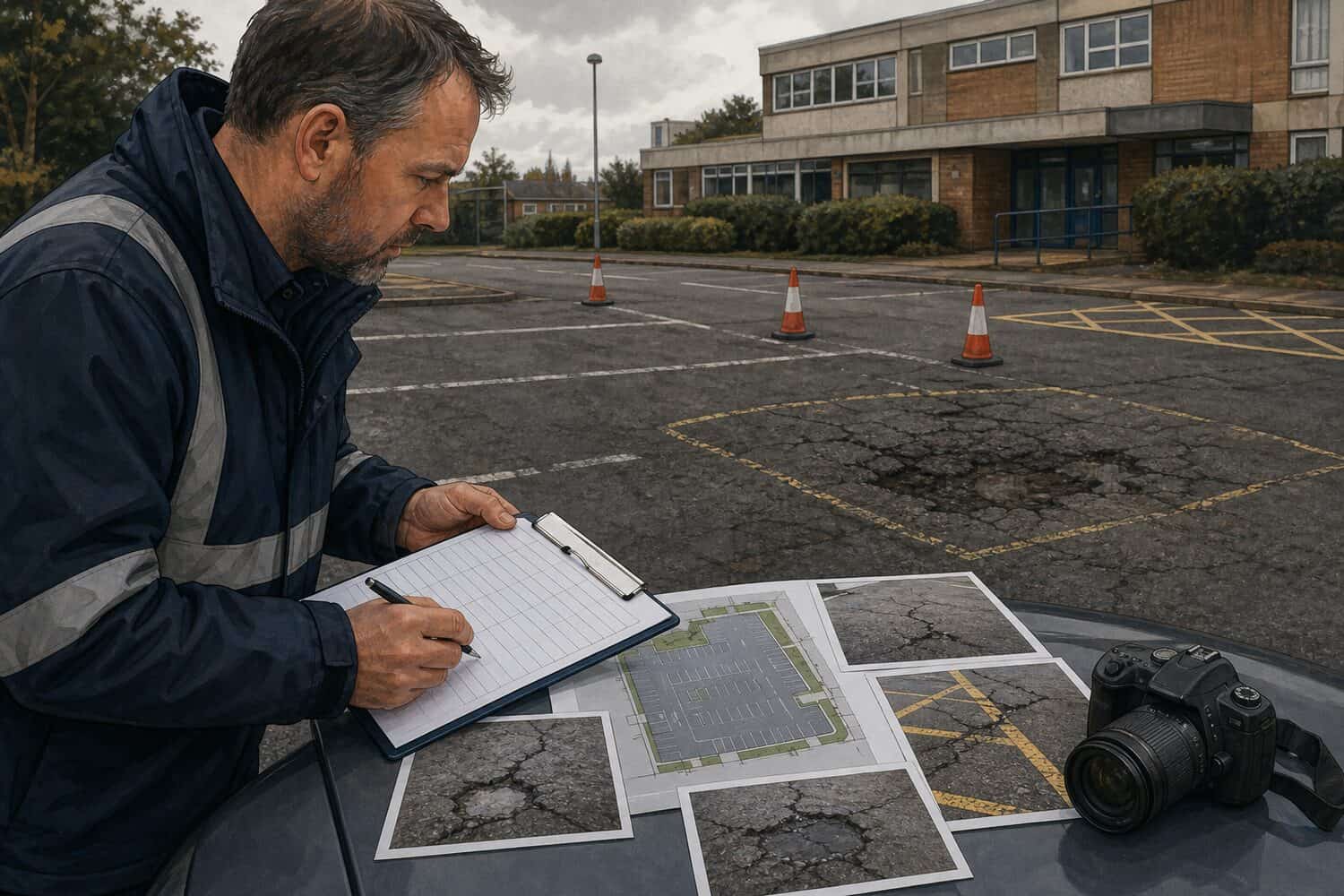
Start with the routes people and vehicles use during a normal working day. On a retail park that could include customer entrances, pedestrian crossings, disabled bays, service yards and refuse collections. On an industrial estate it may include articulated deliveries, forklifts near unit doors, loading bays and shared estate roads.
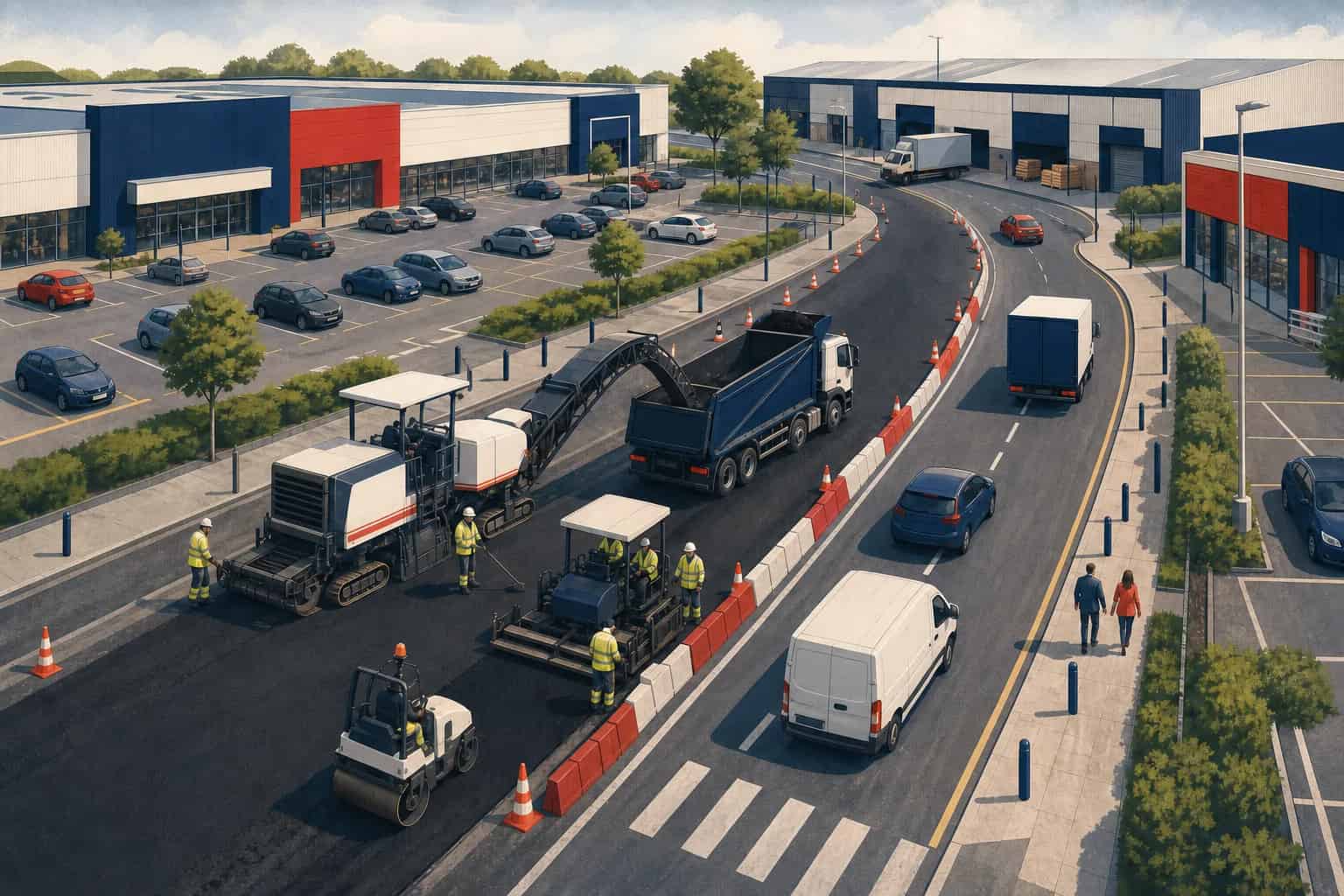
Those movements define the workable zones. A large open area on a drawing can become much smaller once live routes and safe working space are allowed for. The plant decision should follow that assessment. A machine that suits the total area may not suit the width, turning space or handback sequence of each phase.
The HSE's workplace transport site-safety guidance covers traffic routes, separating pedestrians and vehicles, signs, road markings, parking and loading areas. It is a useful starting point, but the controls still need to be designed for the actual site and the work being carried out.
Build phases around real operating times
A phase needs more than a coloured box on a plan. It needs a start condition, a protected working area and a clear point at which it can be handed back. The sequence should reflect when tenants receive deliveries, when customer traffic is busiest and which routes cannot be lost together.
Smaller phases can protect access but they create more joints, more traffic-management changes and more set-up time. Larger phases can improve production but only if the site can release the space. The practical answer is the largest safe work zone that the live operation can genuinely support.
Agree the handback standard before work starts. Temporary edges, ironwork, lining and curing or cooling time can all affect whether a route is ready for use. If follow-on work remains, the reopened area and any restrictions should be unambiguous to tenants and drivers.
Match the hire package to each work zone
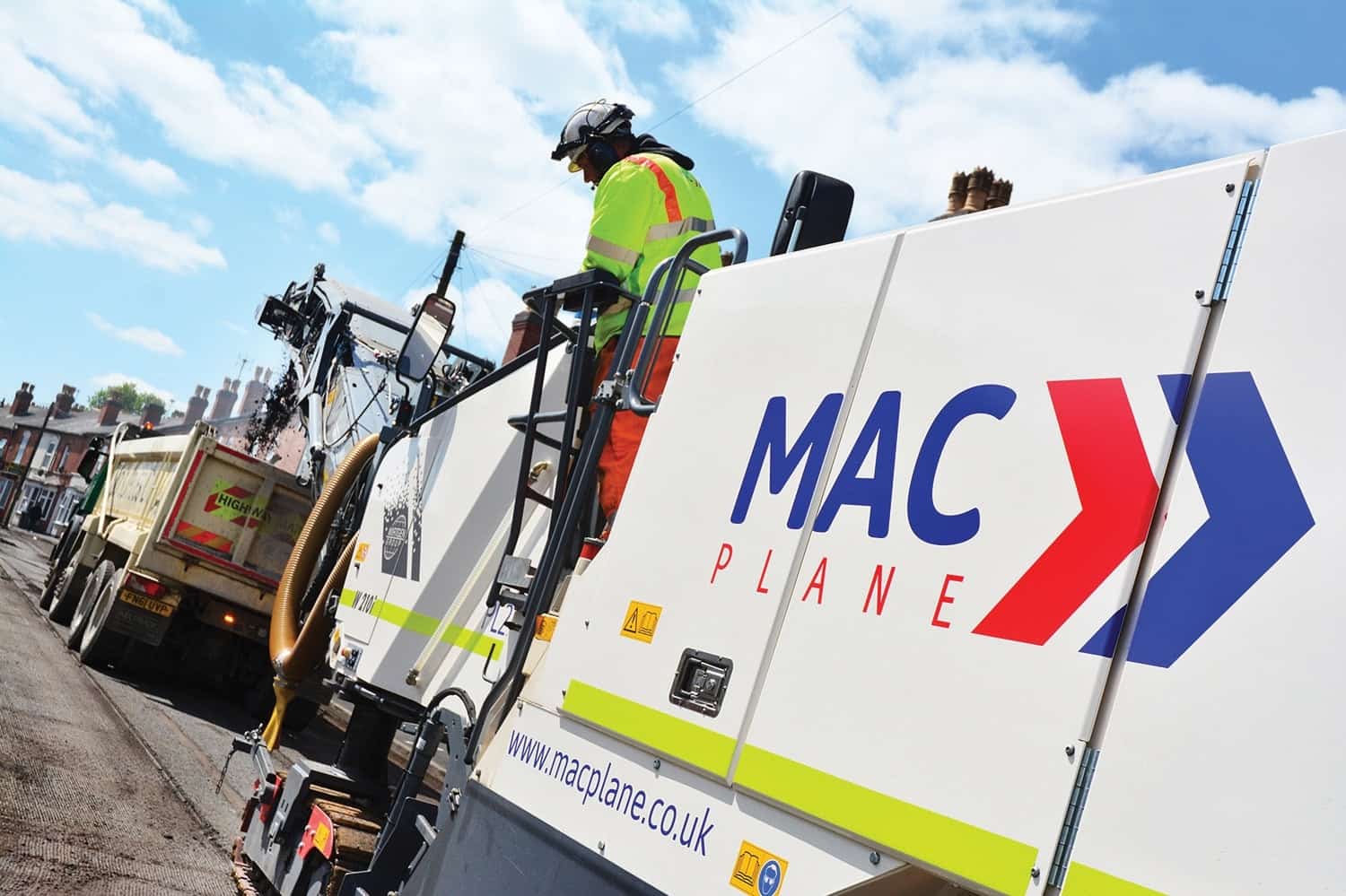
Plant should be selected around the working width, depth, access and planned output of the phase. A planer must be able to enter, work and load out without trapping other vehicles. A paver needs enough room for material supply and a consistent run. Supporting crews need a safe position within the controlled area rather than being squeezed between live traffic and plant.
For contractors planning removal and preparation, operated planer hire can be matched to the cut and access available. Where the resurfacing sequence needs machine and crew support, paver hire and surfacing gang hire can be discussed as one package rather than separate bookings.
That early conversation matters because production figures alone do not describe a live commercial site. Restricted loading areas, short working windows and repeated handbacks may drive the programme more than the size of the surface.
Keep public and delivery routes obvious
People should not have to interpret the works as they arrive. The open entrance, diversion and closed area need to be clear before a driver reaches the decision point. Where a route changes between phases, tenants and regular delivery operators need notice so that yesterday's arrangement does not become today's wrong turn.
Pedestrian routes need the same attention. Barriers and signs should support the planned separation rather than create a narrow route beside moving plant. If a crossing point is needed, it should be controlled through the site arrangements. Keeping the estate technically open is not enough if the route through it is confusing or unsafe.
Communication works best when it is short and specific: which area is affected, when the change starts, which route stays open and who owns questions on the day. The main contractor or site manager can then keep one agreed message across tenants, traffic-management teams and the surfacing operation.
Give the hire team a usable brief
A useful plant and labour brief should include the location, access restrictions, working hours, phase sizes, planing depths, surfacing widths and expected handbacks. It should also flag loading constraints, delivery windows, pedestrian interfaces and any site rules that affect the crew.
Share changes early. If another trade overruns or a tenant cannot release an area, the plant sequence may need to change too. A revised plan before mobilisation is easier to manage than a machine and crew waiting at a barrier with nowhere safe to work.
MAC's role is to understand the package being requested, provide suitable operated plant and labour and work within the contractor's controls. That keeps the relationship clear: the contractor retains the job and client while MAC supports delivery with the right plant and people.
A practical pre-start check
- Confirm which entrances, service roads and pedestrian routes must remain available.
- Set the work zones and handback sequence around genuine tenant and delivery needs.
- Check plant access, loading space, working width and removal routes for every phase.
- Agree who communicates changes and who controls traffic and pedestrians on site.
- Brief the hire partner on depths, outputs, restrictions and site rules before mobilisation.
- Allow for joints, lining, ironwork and other work needed before a phase reopens.
If you are pricing or planning a live retail park or industrial estate scheme, send MAC the work areas, likely programme and access constraints through the contact page. We can help shape the operated plant and labour package around the phases you intend to deliver.
Frequently asked questions
Can resurfacing be completed while shops or units remain open?
It can often be phased around live operations, but the answer depends on the site layout, traffic volumes, pedestrian routes and work required. The contractor and site duty holders need to agree suitable controls. Plant and labour should then be booked to match those phases.
What should be planned first on a live commercial site?
Plan the essential vehicle and pedestrian movements first. Once the routes and releaseable work areas are understood, the contractor can set phases and select plant that fits the available space and programme.
Does operated plant hire include traffic management?
Do not assume it does. The scope should state who provides and controls traffic management, barriers, signs and marshals. MAC can then brief its operators and crews to work within those agreed site arrangements.
What information does MAC need before quoting?
Useful information includes the location, work area, material depths, access limits, working hours, phasing, required plant and crew support. Plans, photographs and a conversation about the live constraints help establish what the job actually needs.