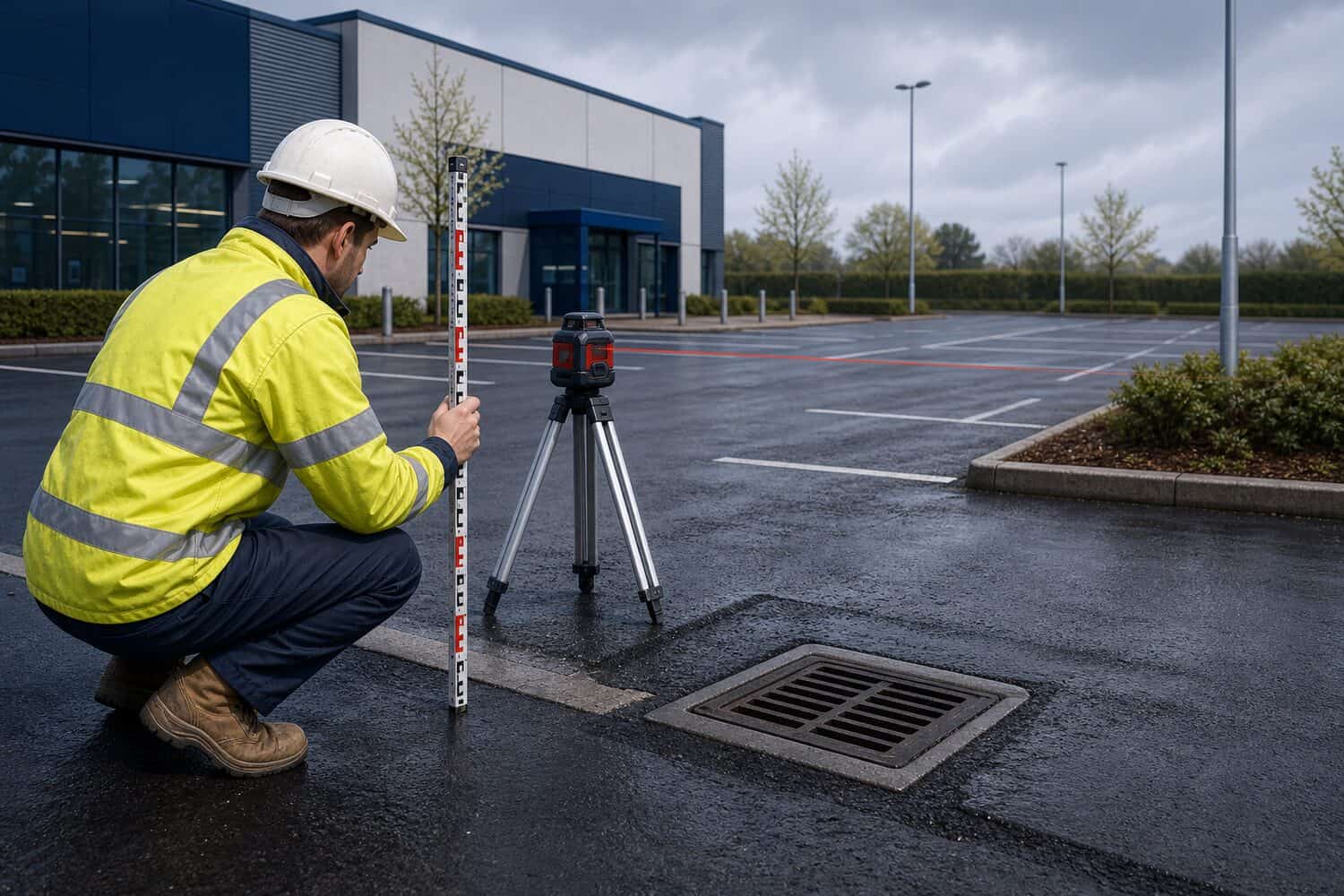

Falls decide where water goes after rain. If the gradient is wrong, a freshly resurfaced car park can pond, softens around gullies and fails earlier than it should. This guide explains when falls need changing during resurfacing, how to spot the warning signs and what a proper survey should settle before plant arrives. No prices here (always POA after survey).
What falls are meant to do
Falls are the designed slopes that take surface water to gullies, channels or edges. On a commercial car park they protect the asphalt, the base and the people using the site. When falls collapse, water sits, freezes, frets the surface and finds weak points around ironwork and patch edges.
Resurfacing does not automatically fix that. If the new mat follows old dips, the ponding returns with a better looking finish. That is why drainage and falls sit before the surface decision in drainage before resurfacing.
Signs the falls need attention
Walk the site after rain, not just on a dry day. Common warnings include:
- Water sitting in bays, aisles or at entrances
- Sheets of water running towards doorways or pedestrian routes
- Gullies that sit proud or buried relative to the surrounding surface
- Soft or fretting edges around ironwork
- Repeated patches in the same low spots
Those patterns usually mean levels, outlets or both need correcting as part of the works, not as a later complaint.
When resurfacing can keep the existing falls
Existing falls can stay if:
- Water still reaches working outlets after heavy rain
- There are no chronic low spots under traffic
- Ironwork levels still make sense with the finished surface
- The base is firm and not pumping under load
In that case a controlled plane and resurface can restore texture and shape without a redesign. If soft spots or deep repeating holes are present, falls alone are not the whole story. See surface versus base failure and resurfacing versus reconstruction.
When falls must change
Falls need changing when the current shape cannot take water away safely, or when reconstruction will alter the finished level. Typical cases:
- Collapsed or reverse falls creating ponding
- Outlets blocked, undersized or in the wrong place for current use
- Local reconstruction that raises or rebuilds failed zones
- Entrances and crossing points that push water into buildings or paths
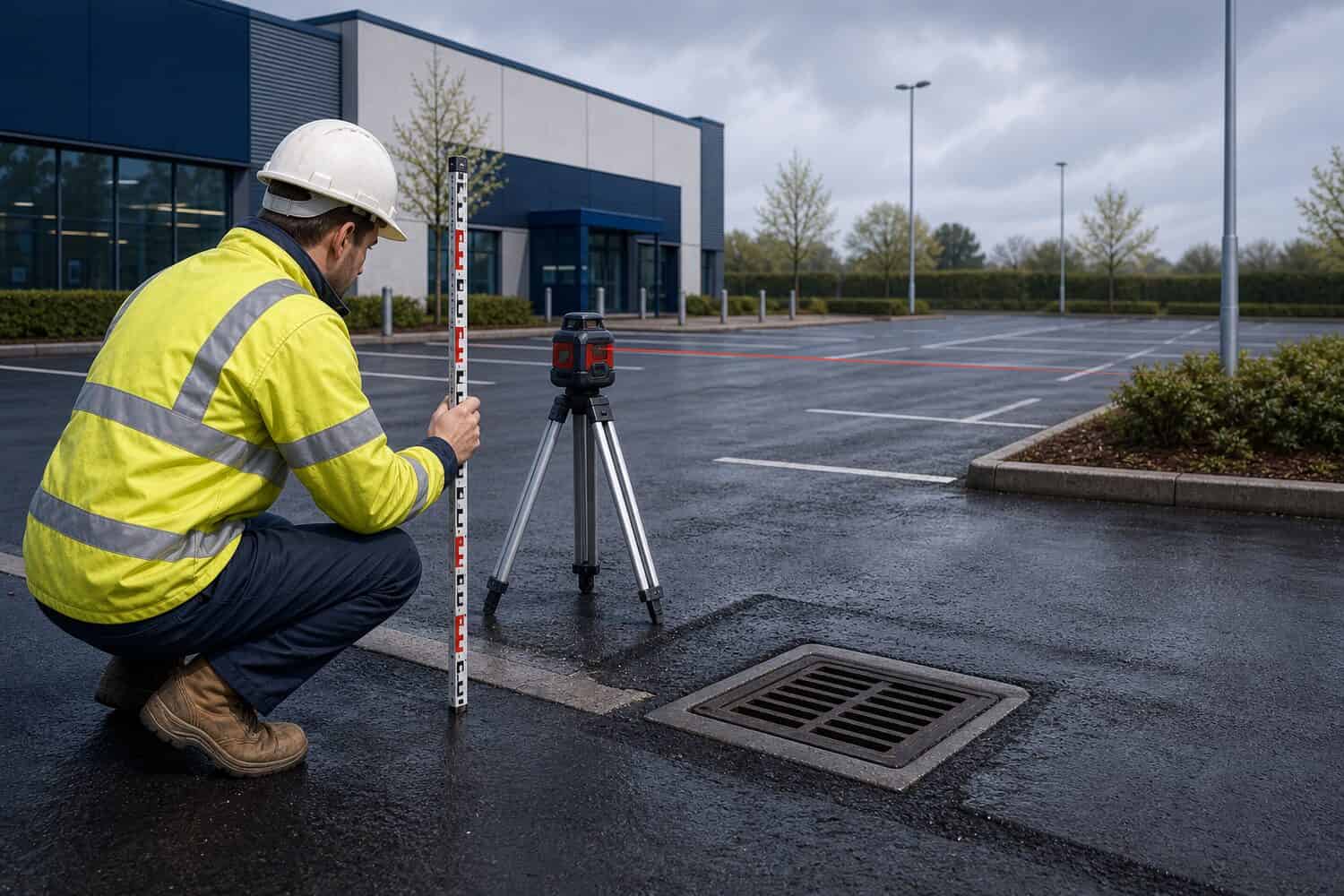
Changing falls can mean regulating, resetting ironwork, adjusting kerb lines or rebuilding local areas so the finished surface sheds water properly. That work belongs in the programme before the wearing course goes down.
What the survey should answer
Before locking a resurfacing quote, ask for clear answers on:
- Which zones already pond after rain
- Which gullies or channels need resetting
- Where existing falls can stay
- Where levels must be redesigned or rebuilt
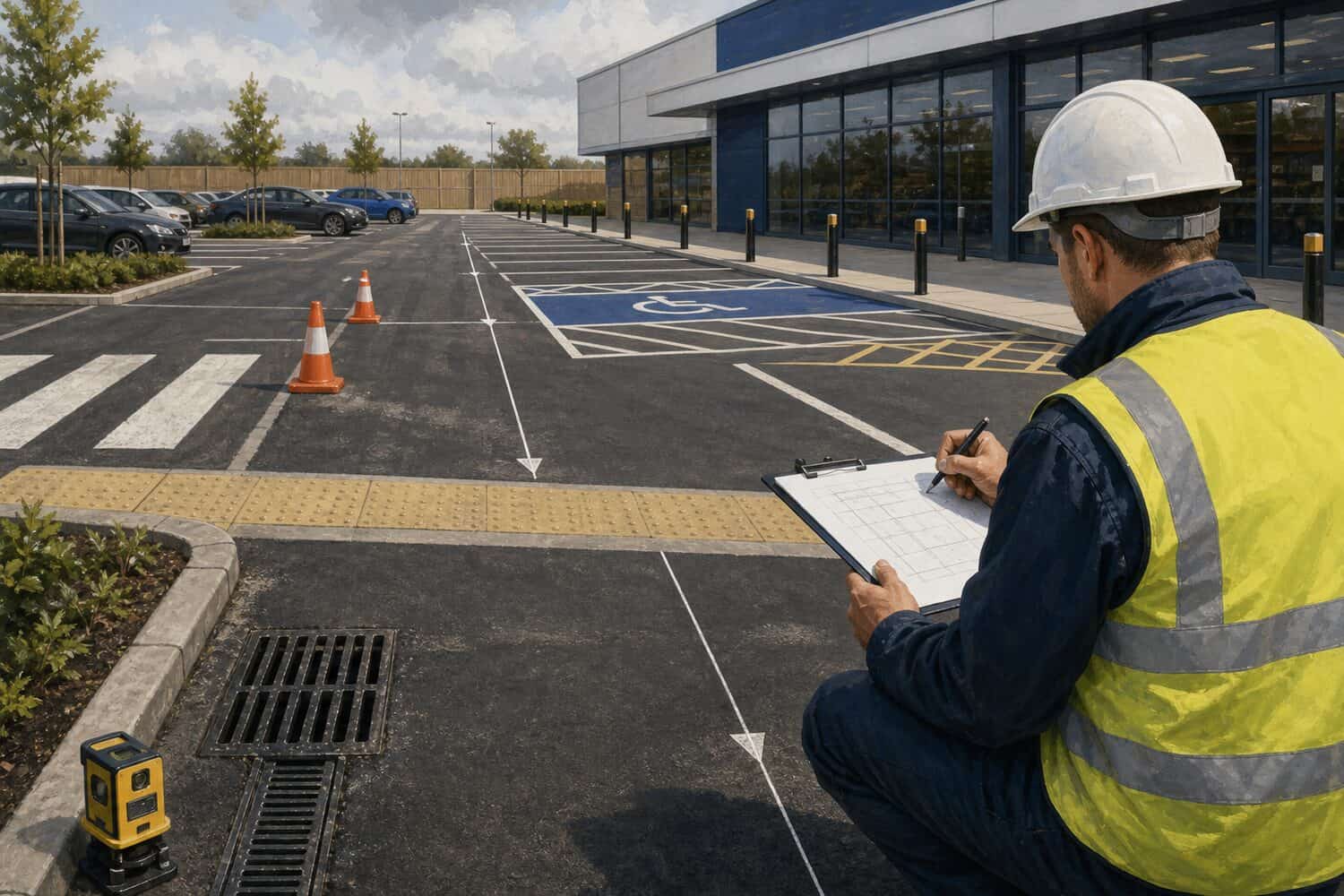
- How the finished falls will be checked before reopen
Vague answers usually mean the job is still being sold as a surface replacement only. Built to last needs the water path settled first.
Frequently asked questions
Will the falls need changing when resurfacing a car park?
Only where the current slopes no longer take water to working outlets, or where reconstruction changes finished levels. Sound falls can often stay.
Can overlay fix ponding?
Not reliably. Overlaying over old dips usually leaves the same ponding under a new surface.
Do all gullies need lifting during resurfacing?
Not always. Ironwork should be checked against the finished level. Some covers stay, some need resetting so water can enter them cleanly.
Is ponding always a falls problem?
No. Blocked outlets, collapsed base and poor construction joints can all hold water. Falls are one of the first checks, not the only one.
When should falls be signed off?
After the finished surface is in and before markings and reopen, with a wet weather or water test where practical.
Next step
Inspect the park after rain, mark every standing water zone and ask the survey to separate keepable falls from redesign areas. That keeps the resurfacing scope honest.
MAC Surfacing delivers car park resurfacing across the West Midlands and further afield with own crews, own plant and own planing, so drainage, falls and resurfacing can be planned as one accountable package. Done without disruption starts with getting the water path right before the finish goes down.