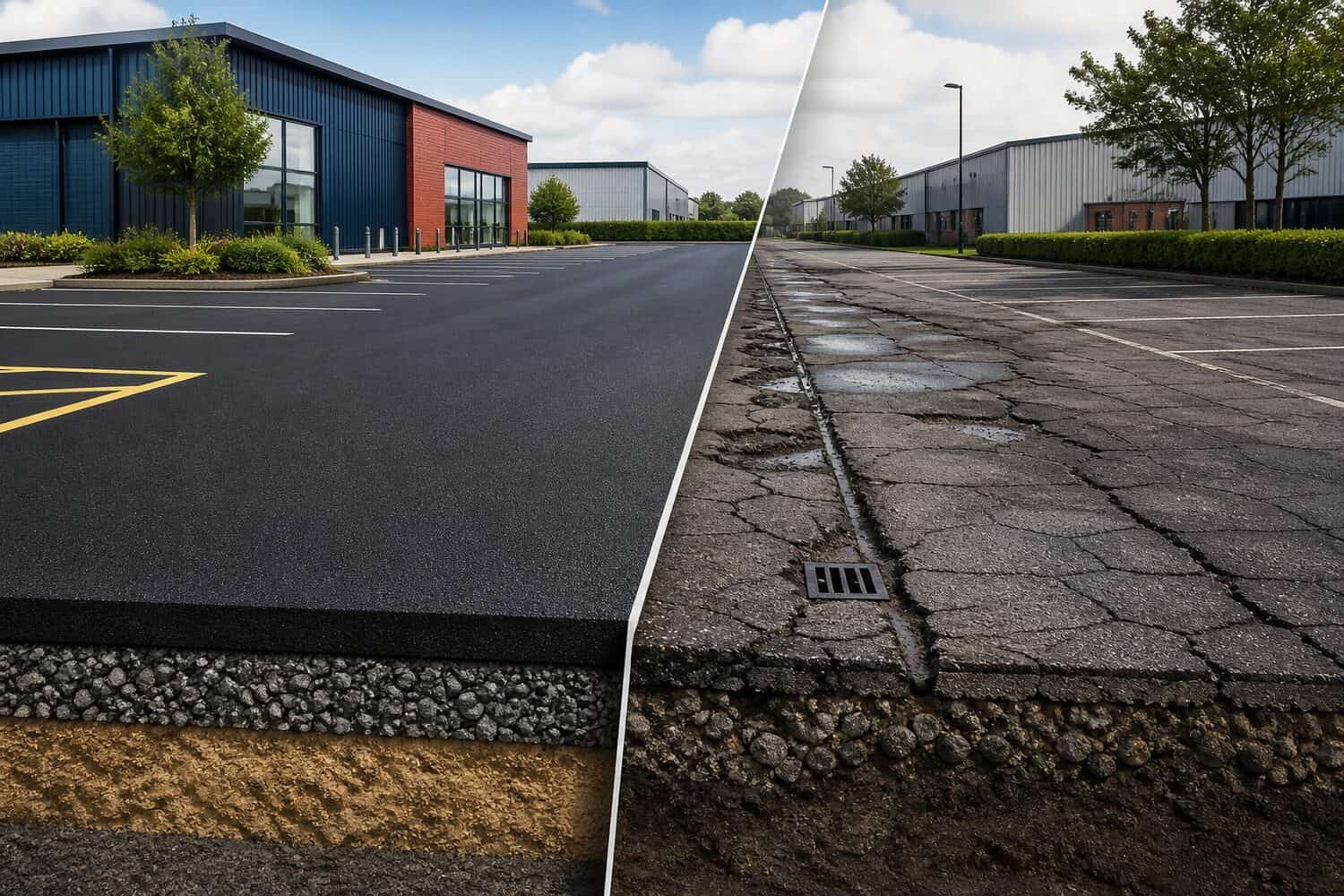
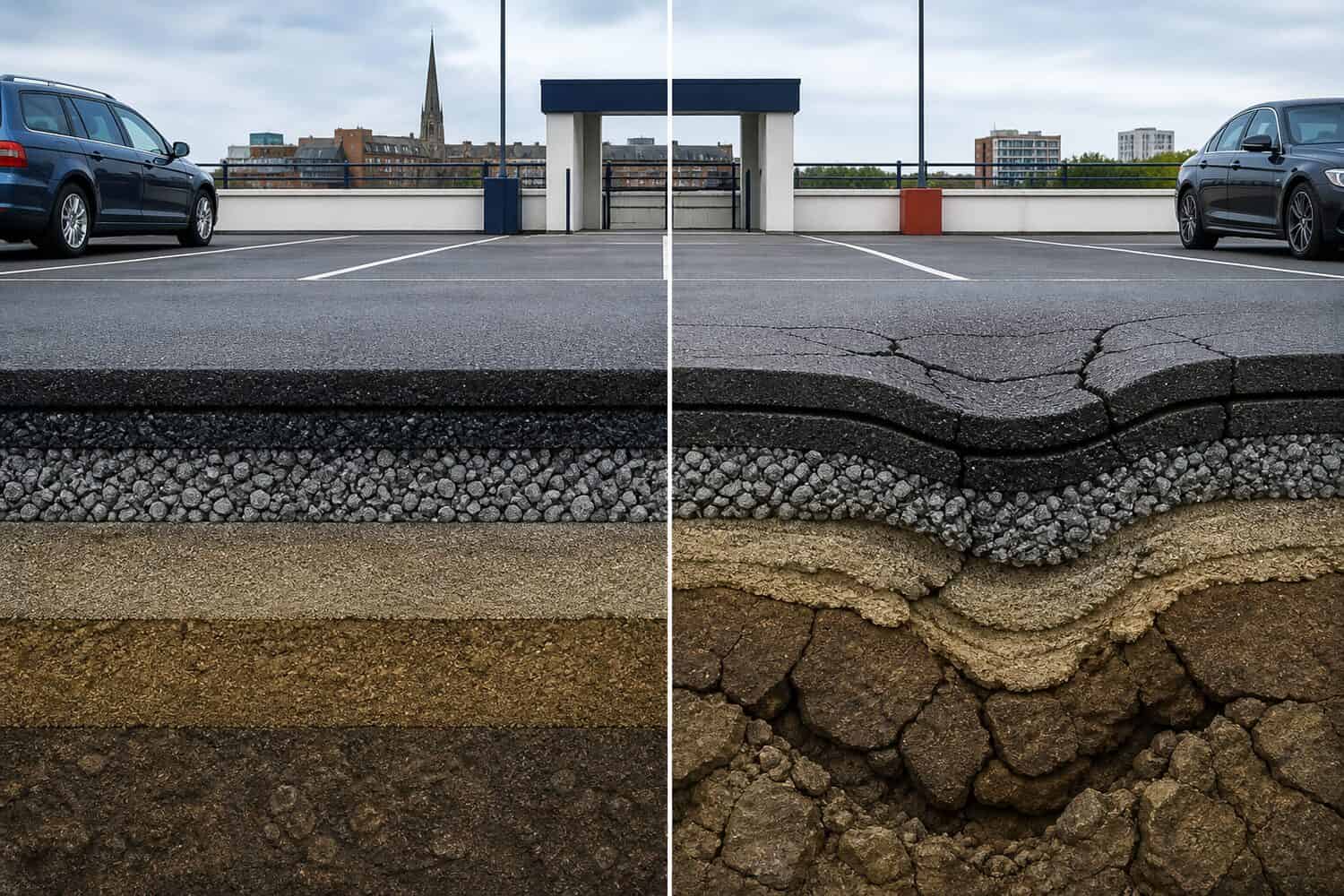
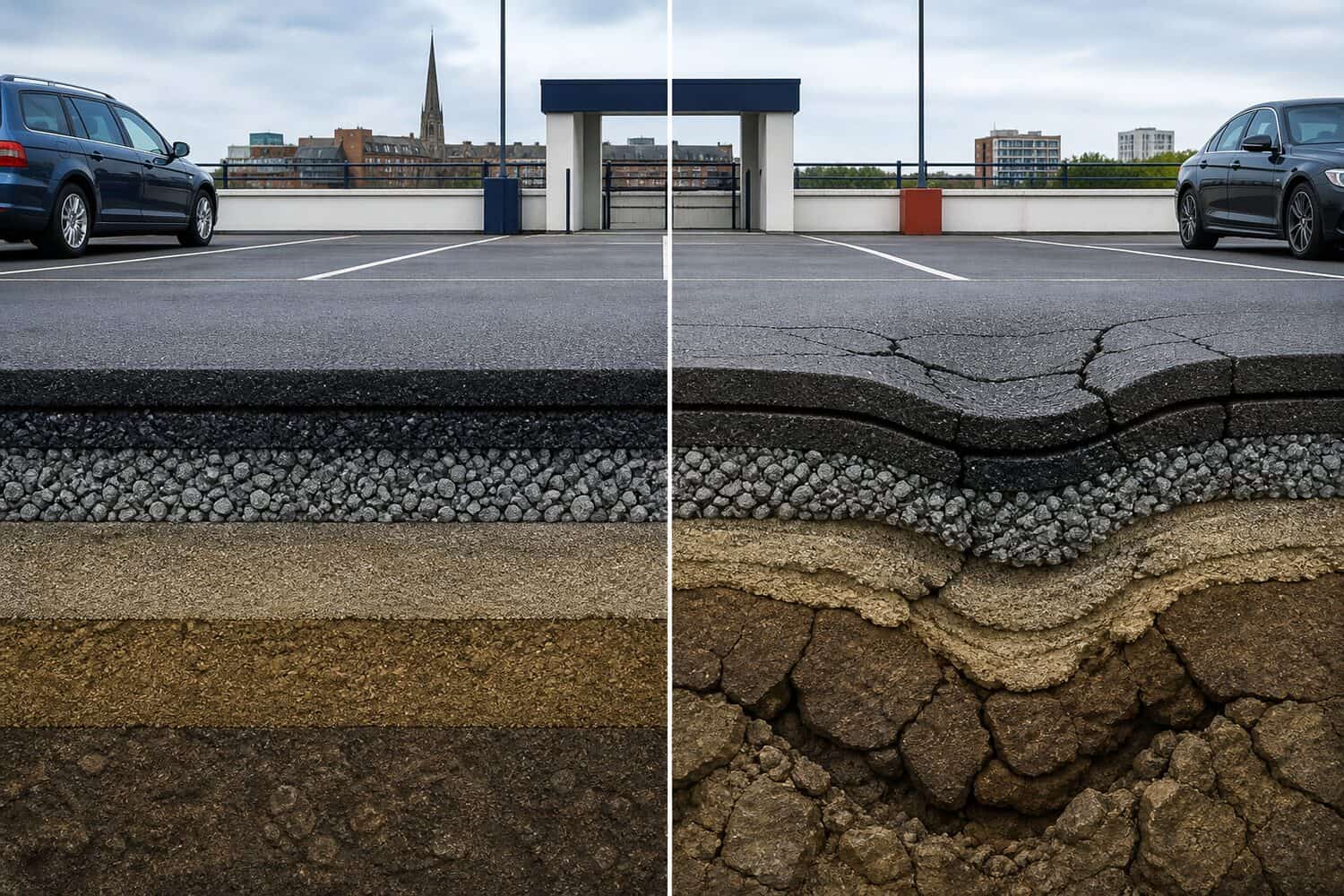

Resurfacing and reconstruction are often used as if they mean the same thing. They do not. One replaces the worn surface. The other rebuilds the support underneath it. Choosing the wrong one is how sites either waste money on depth they do not need, or pay twice because a thin resurface fails over a soft base.
This guide is for facilities managers, landlords and estate teams comparing resurfacing with full or local reconstruction. No prices here (always POA after survey). Just how to tell which route fits, and what each one actually includes.
What resurfacing means in practice
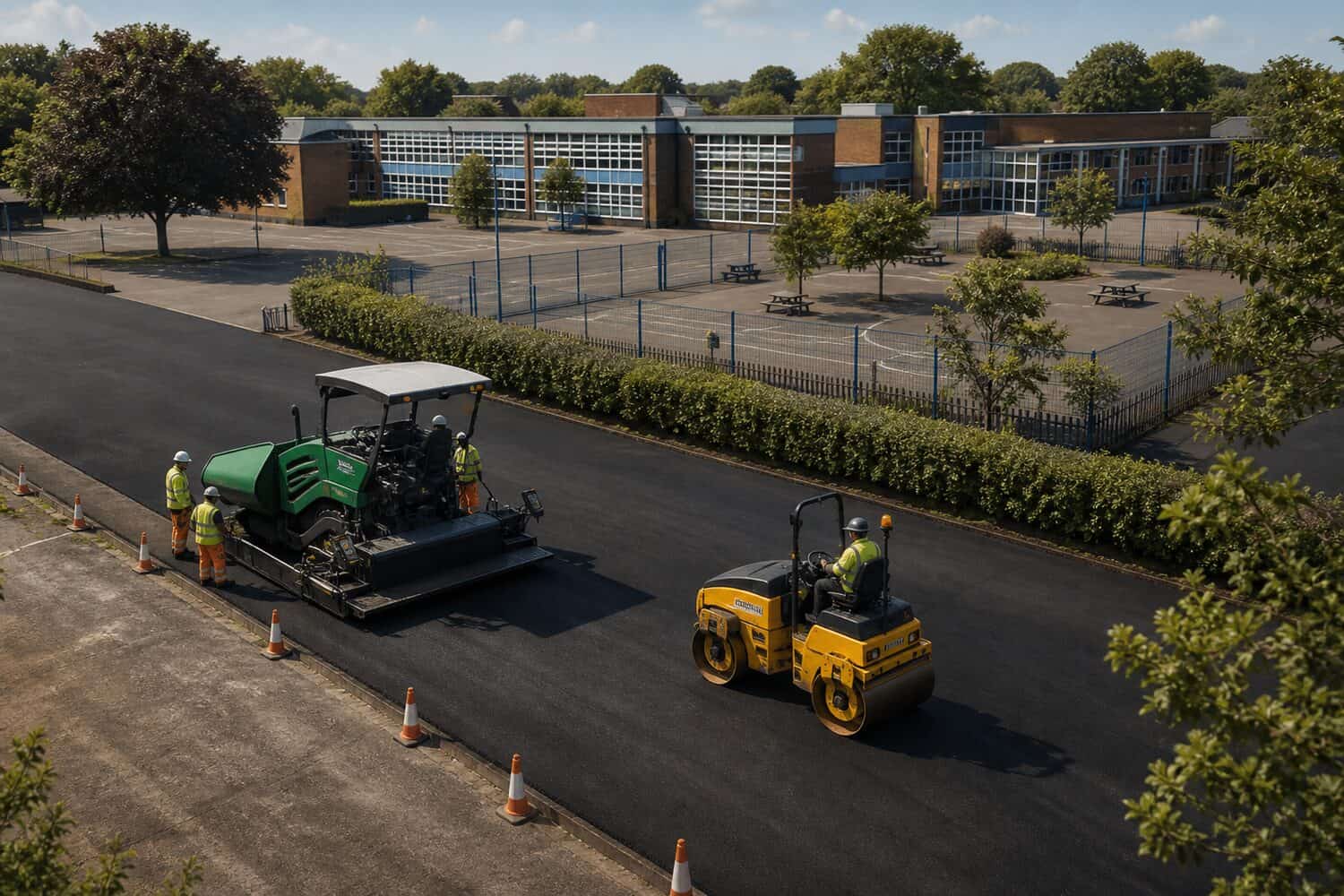
Resurfacing usually means planing away the failed or worn asphalt and laying a new surface on a base that is still sound. It is the right route when:
- The support layer is firm
- Falls still work, or only need light regulating
- Failures are mostly surface fretting, cracking or shallow defects
- The site needs a renewed wearing course rather than a structural rebuild
Done properly, resurfacing restores texture, appearance and day-to-day usability without opening the whole construction depth.
What reconstruction means
Reconstruction goes deeper. Failed base material is excavated and replaced, then the new surface is built back up. It is needed when:
- Soft spots flex or pump under load
- Deep holes keep returning in the same places
- Settlement has destroyed falls
- Water is getting into a weak support layer
Reconstruction can be local rather than park-wide. Many commercial sites only need deep repair in entrance lanes, turning heads or chronically wet zones, with standard resurfacing elsewhere. The diagnosis in surface versus base failure is what decides that split.
Why the wrong label creates the wrong programme
If a soft base is sold as “just a resurface”, the new mat follows the old movement. If a tired but firm surface is sold as full reconstruction, the site pays for excavation it did not need. The useful quote separates:
- Surface resurfacing
- Local reconstruction zones
- Drainage or ironwork corrections
- Markings and reopen controls
That is how you compare options honestly instead of arguing about product names.
How to choose without guessing
Walk the site wet and dry, then ask the survey to answer four questions:
- Is the ground under the failed zones firm or soft?
- Is ponding caused by surface shape or collapsed support?
- Which areas can be planed and resurfaced as-is?
- Which areas must be rebuilt before any new surface goes down?
If those answers are vague, do not lock the programme. Recurring holes, soft spots and wet-weather ponding are the usual warnings that reconstruction belongs in at least part of the scope. See also why potholes keep coming back and drainage before resurfacing.
Local reconstruction is often the practical middle path
Full-park reconstruction is not the default. The common commercial answer is mixed:
- Rebuild the failed entrance, delivery lane or wet corner
- Resurface the firmer remaining areas
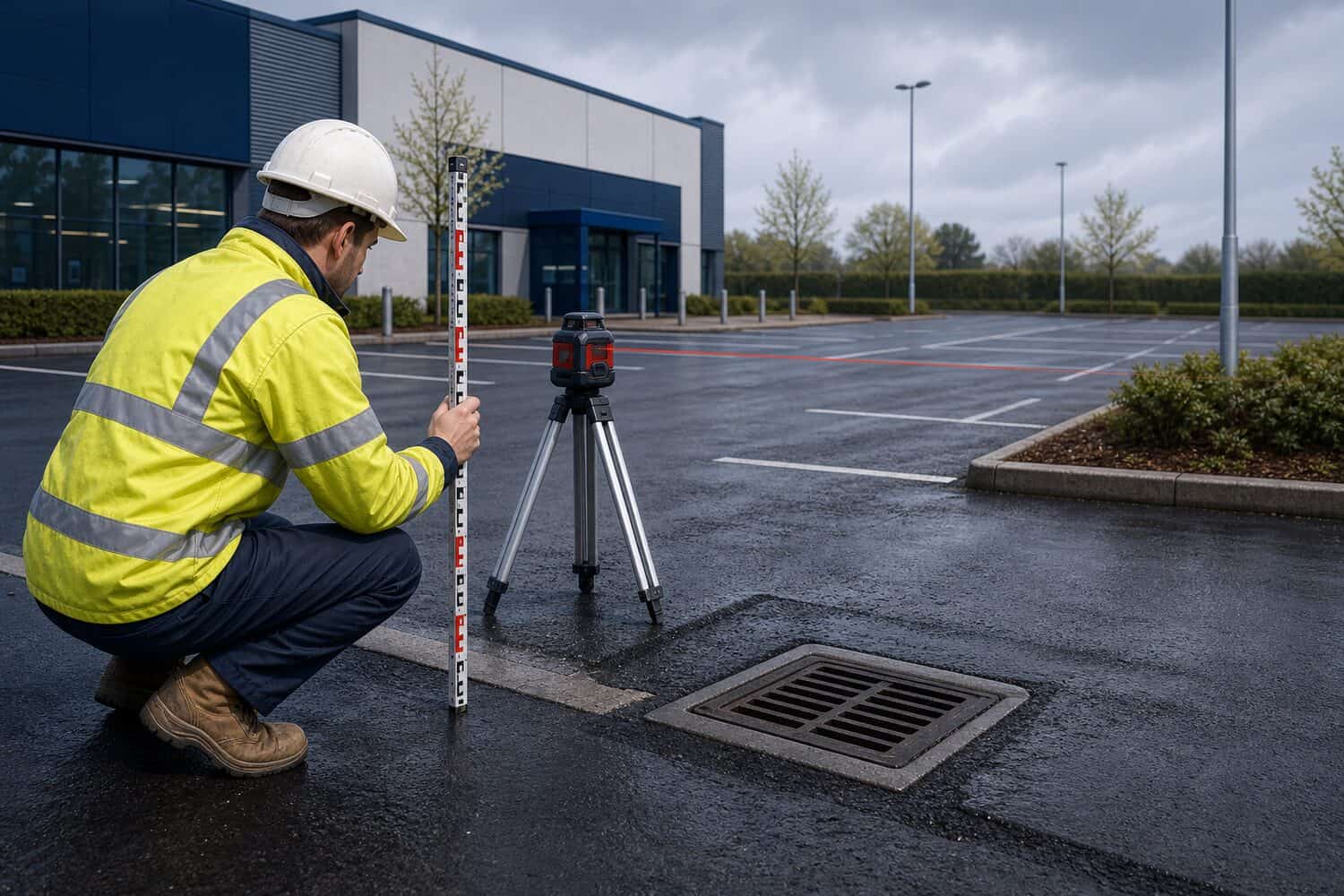
- Reset gullies and falls where water is driving the failure
That keeps cost tied to evidence. It also makes phasing easier, because the deepest work can be concentrated where it is actually needed.
Frequently asked questions
What is the difference between resurfacing and reconstruction?
Resurfacing replaces the worn surface on a sound base. Reconstruction rebuilds failed support layers before the new surface goes down.
Can part of a car park be reconstructed and the rest resurfaced?
Yes. That is often the most sensible commercial package when only some zones are soft or deeply failed.
Does reconstruction always mean a longer shutdown?
It can, especially where deep repairs are widespread. Local reconstruction inside a phased programme is usually more manageable than rebuilding everything at once.
How do we know which route we need?
By survey. Soft spots, pumping, deep repeating holes and collapsed falls point to reconstruction. Surface fretting over firm ground usually points to resurfacing.
Is reconstruction the same as patching?
No. A proper reconstruction removes and replaces failed support. A temporary patch only fills the visible hole.
Next step
Get a survey that names surface zones and reconstruction zones separately. Then compare programmes on that evidence, not on the broadest or cheapest label.
MAC Surfacing delivers car park resurfacing across the West Midlands and further afield with own crews, own plant and own planing, so local reconstruction and resurfacing can be planned as one accountable package. On commercial parks around the region, the programmes that last are the ones that rebuild the right layer in the right place. Yours can be one of them.