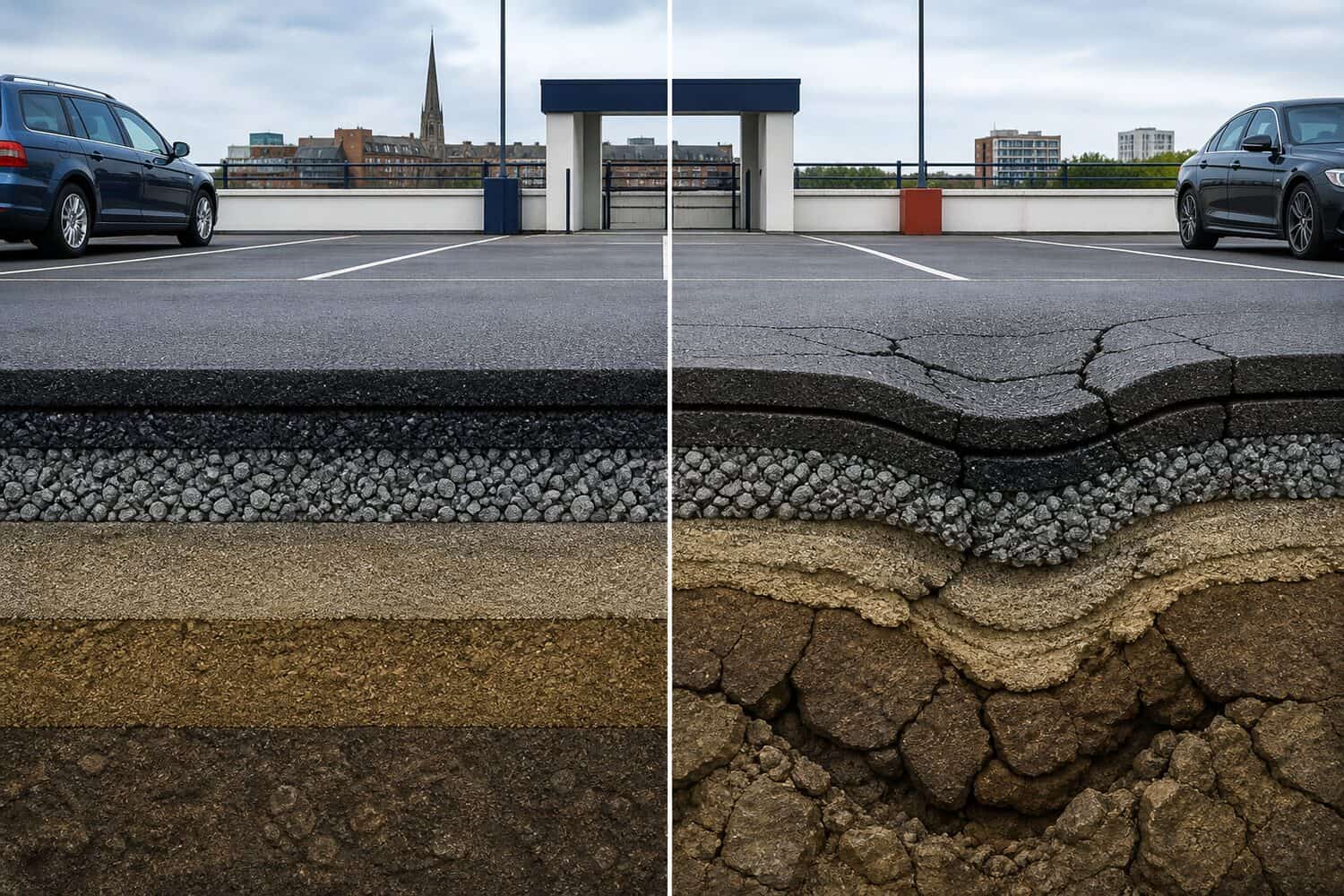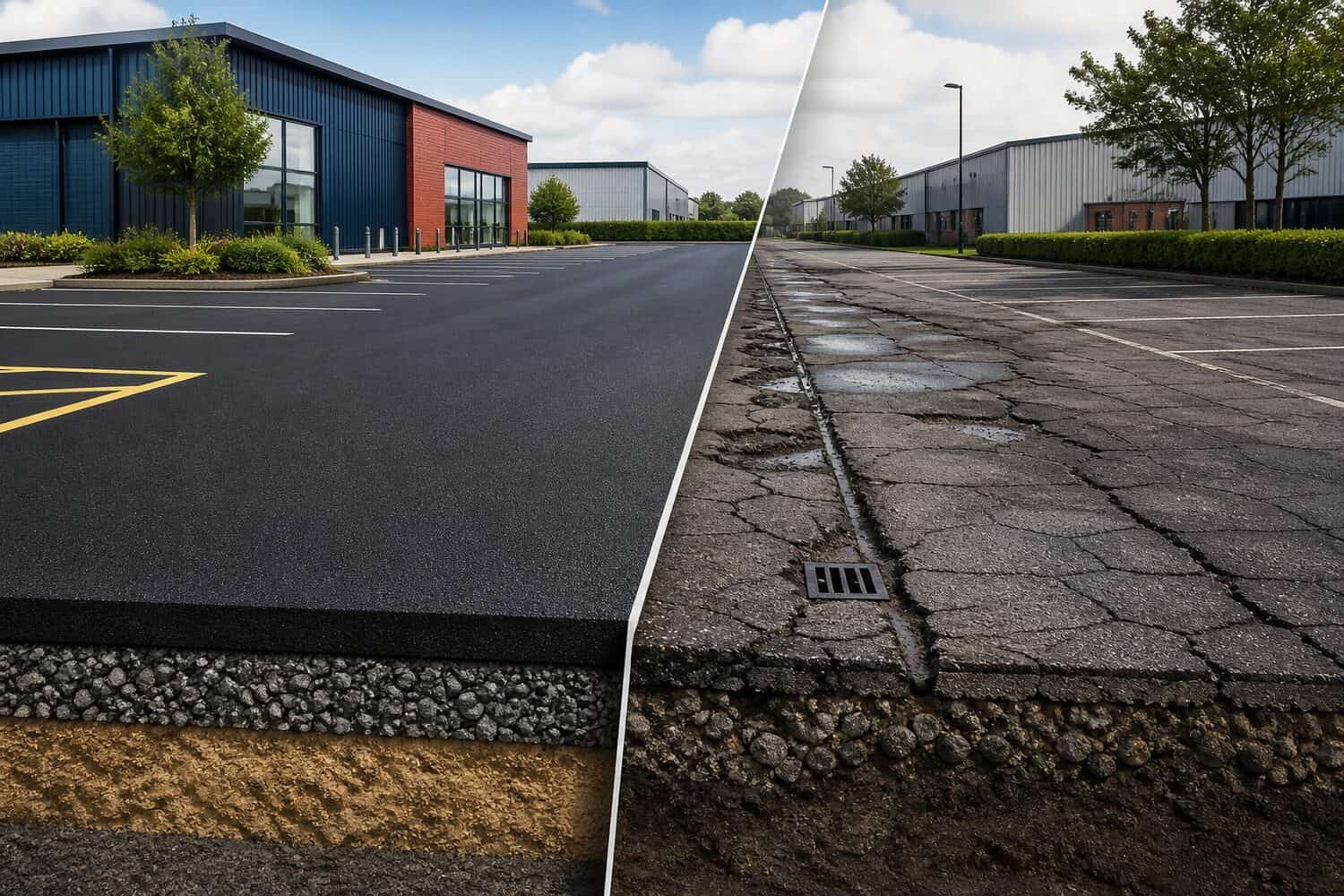

When a car park starts failing, the first question is not which product to buy. It is whether the problem is in the surface or in the base underneath it. Get that wrong and you either over-specify a full rebuild, or under-specify a thin resurface that fails again.
This guide is for facilities managers, landlords and estate teams trying to read the difference. No prices here (always POA after survey). Just the practical signs of surface wear versus base failure, and what each one means for the works.
Why the distinction matters
A surface problem can often be planed off and replaced. A base problem needs the failed support opened up, rebuilt and then resurfaced. Treat every defect as surface-only and you risk sealing over movement. Treat every defect as a full reconstruction and you may spend on depth you do not need.
The survey should make that split explicit before the programme is locked.
Signs the failure is mainly in the surface
Surface-led failure usually looks like this:
- Fretting, scabbing or loss of texture across wider areas
- Map cracking or age-related cracking over ground that still feels firm
- Shallow potholes with sound material beneath once the failed crust is removed
- Polished, slippery texture without soft spots underfoot
- Markings failing because the top surface itself is breaking up
In those cases a proper plane and resurface can restore shape, texture and falls without a deep rebuild, provided drainage still works.
Signs the base has failed
Base-led failure is different:
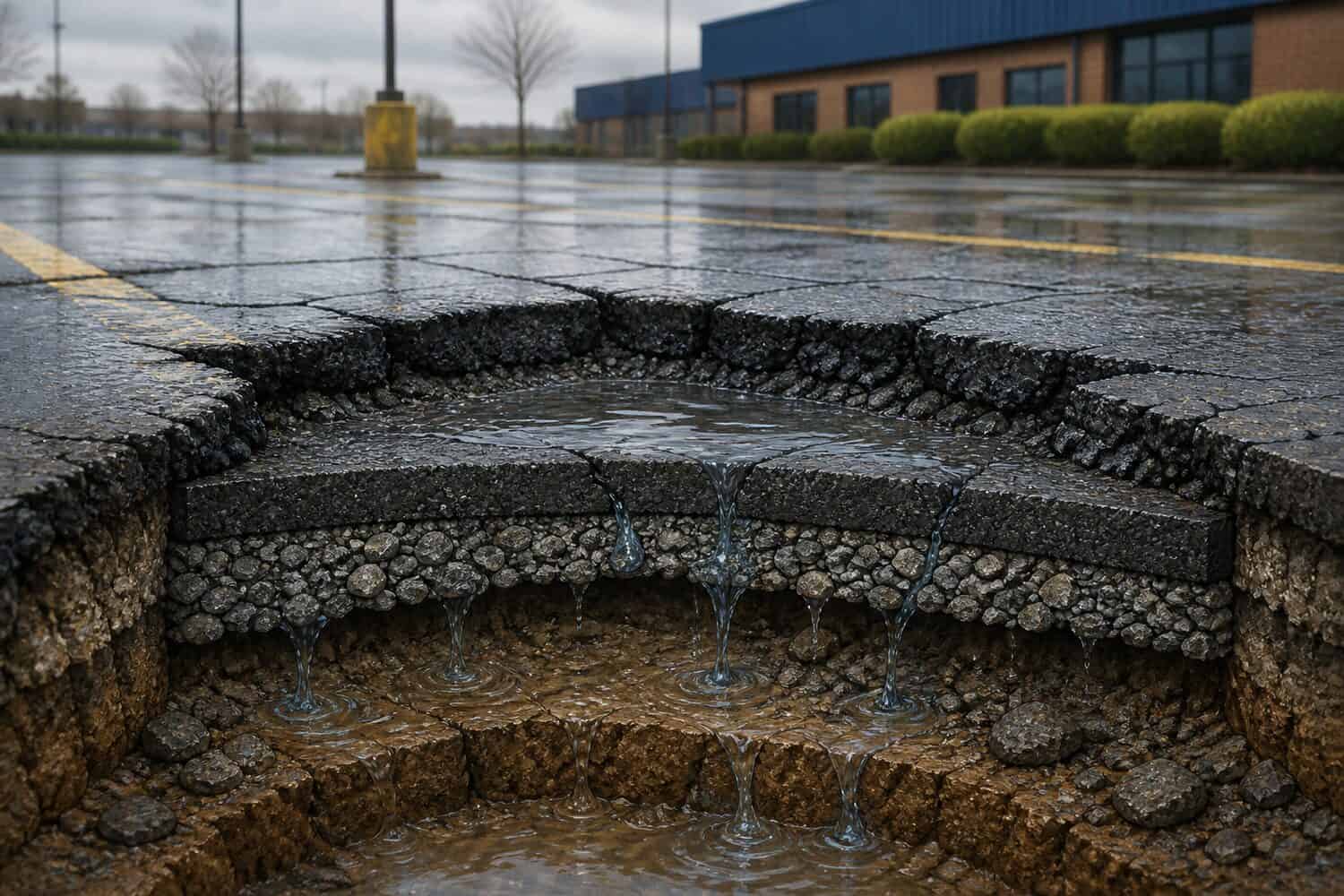
- Soft spots, pumping or flexing under a vehicle or boot
- Deep holes that keep reopening in the same wheel tracks
- Water appearing from below or through cracks under load
- Settlement that has changed falls and created permanent ponds
- Repeating patches that never hold, even when cut back carefully
If the support layer has lost strength, a new thin surface will follow the same movement. That is when local reconstruction or deeper repair has to sit inside the resurfacing programme. See also why potholes keep coming back.
How a short survey separates the two
A useful survey does more than photograph cracks. It should:
- Walk wet and dry routes
- Probe soft areas
- Check whether ponding is surface shape or collapsed support
- Note which zones are surface-only and which need base repair
- Say what can be phased and what must be rebuilt before laying
That is the difference between a guess and a scope. Without it, the quote is only describing the visible asphalt.
What each diagnosis means for the works
If the failure is surface-led, the core package is usually planing, regulating where needed, resurfacing, and remaking markings. If the failure is base-led, the package needs extra lines for excavation, replacement support, compaction and then the new surface. Drainage may sit in either case, but wet soft spots almost always point below the wearing course. The drainage-before-resurfacing guide covers that overlap.
When the answer is mixed
Many commercial parks are not one or the other. One wing may be tired but firm. Another entrance lane may be soft and wet. That is common, and it is also useful: the programme can resurface the sound areas and rebuild only the failed zones. The key is naming those zones before work starts, not discovering them after the first wagon arrives.
Frequently asked questions
Is the problem the surface or the base layer?
Look for soft spots, pumping, deep repeating holes and settlement. Those point to the base. Fretting, polished texture and shallow defects over firm ground are more often surface-led.
Can a resurface fix base failure?
Not on its own. The failed support has to be rebuilt first, then resurfaced.
Do all soft spots mean full reconstruction of the whole park?
No. Many sites only need local reconstruction in the failed zones, with standard resurfacing elsewhere.
How do we avoid paying for the wrong scope?
Insist on a survey that separates surface wear, base failure and drainage. Then price those packages separately.
When should we stop patching?
When the same zones keep failing or the ground under them is soft. At that point another fill is buying time, not a finish. The repair or resurface guide helps draw that line.
Next step
Walk the failed zones, note what flexes or ponds, and get a survey that names surface repairs and base repairs as separate decisions. Then set the programme around that evidence.
MAC Surfacing delivers car park resurfacing across the West Midlands and further afield with own crews, own plant and own planing, so surface works and local base rebuilds can be planned as one accountable package. On parks and estate roads around the region, the jobs that last are the ones that fix the right layer first. Yours can be one of them.