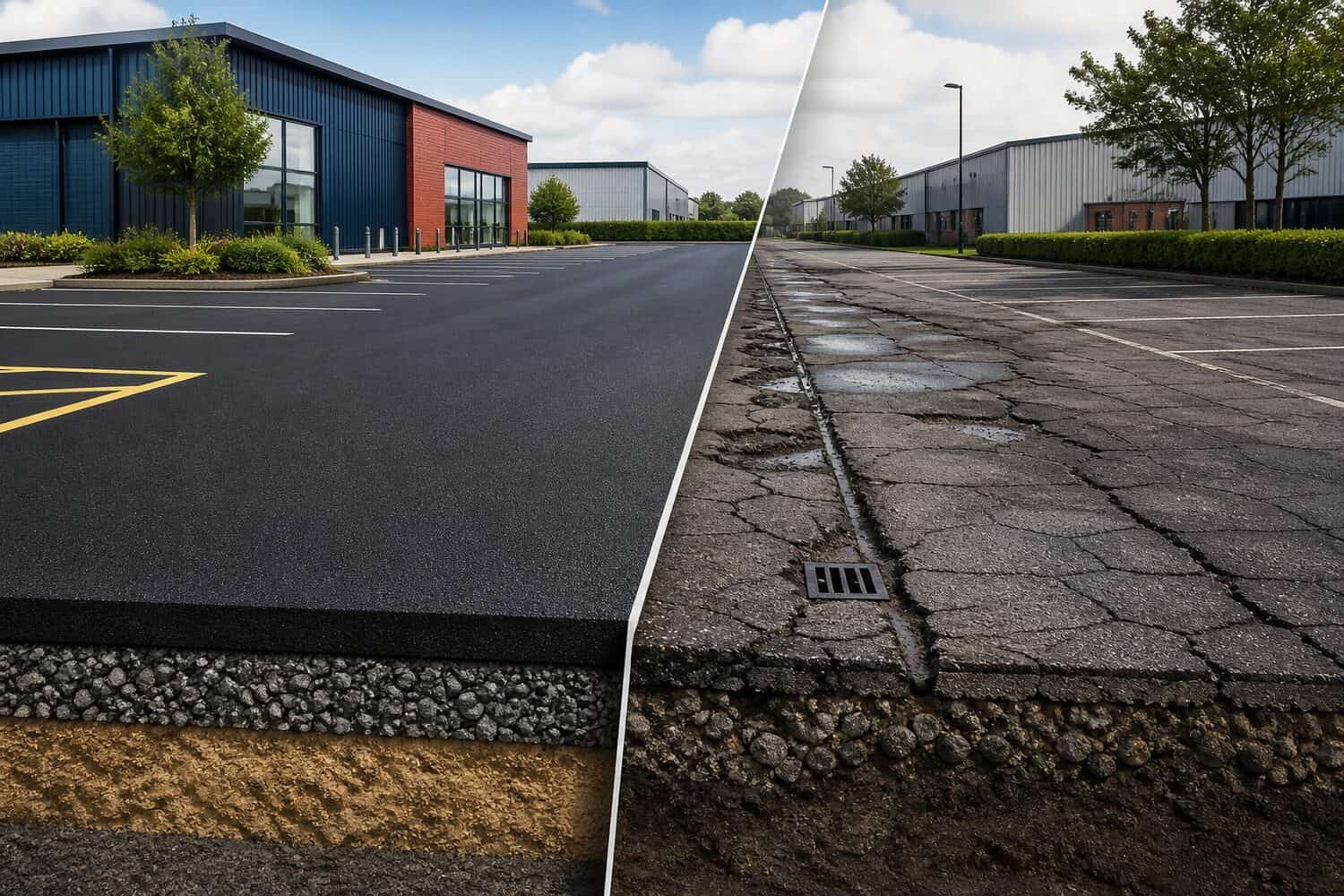

How long a commercial car park surface lasts depends less on the brand of asphalt and more on prep, drainage, traffic and maintenance. A well built surface on a sound base can give years of service. The same material on soft ground, poor falls or heavy turning traffic can fail early. This guide sets out what actually drives lifespan, what shortens it and how to plan replacement before the surface becomes a daily problem.
No prices here (always POA after survey). The aim is a practical lifespan picture for facilities managers, landlords and estate teams deciding when resurfacing is still value and when the site is past that point.
What "lasts" really means on a working car park
Lifespan is not one fixed number. A commercial car park is judged by how it performs under real use:
- Does water still leave the surface after rain?
- Are bays and aisles still safe to use?
- Are holes, fretting or soft spots spreading?
- Is the surface still presentable for staff, visitors and tenants?
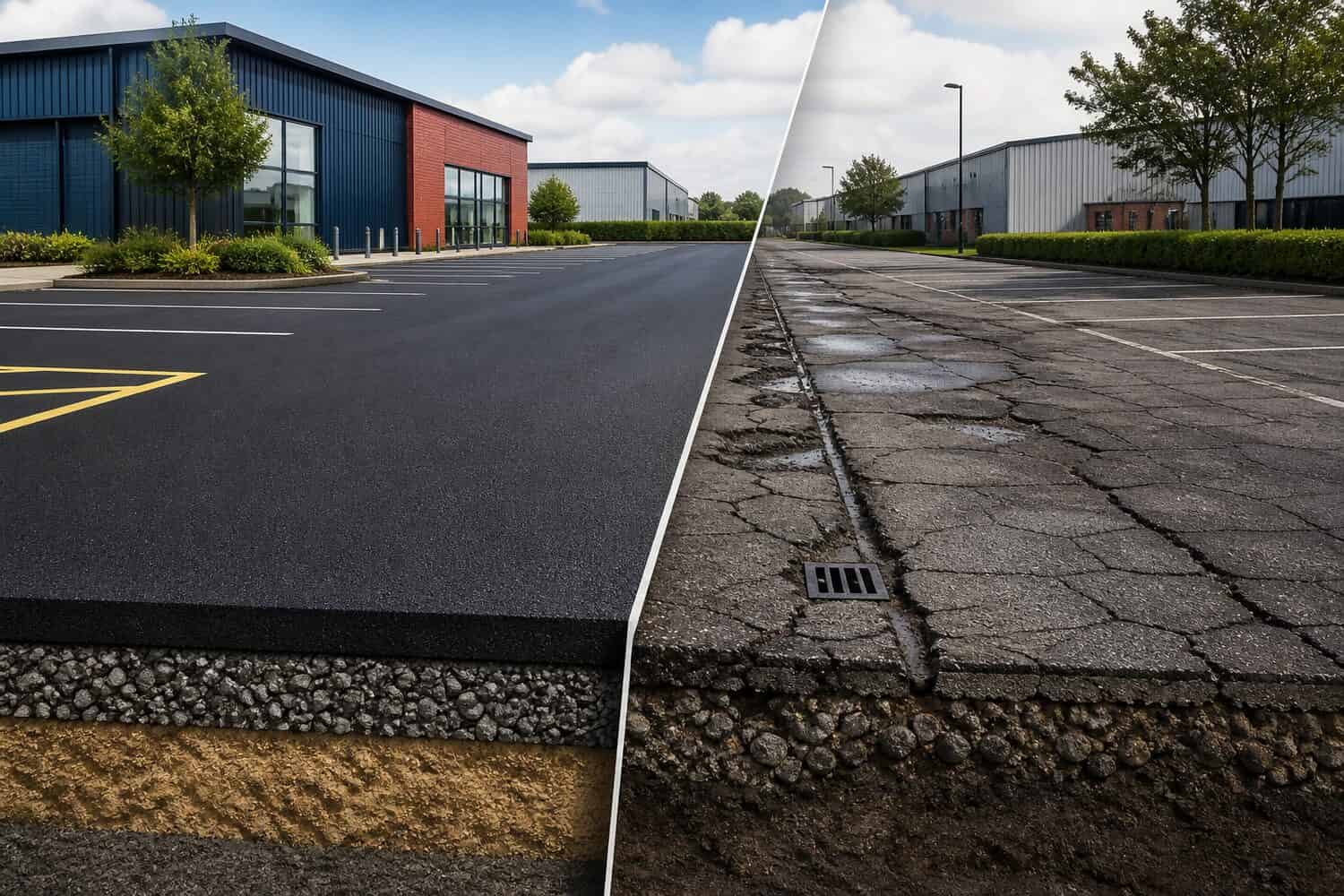
A surface can look tired and still be serviceable. It can also look tidy while the base is already moving. That is why lifespan questions should always sit beside the diagnosis in surface versus base failure.
What shortens a car park surface's life
Most early failures come from the same cluster of causes:
- Standing water and collapsed falls
- Weak or saturated support layers
- Repeated patching without fixing the cause
- Heavy turning, braking and delivery traffic in the same zones
- Skipped prep before a thin resurface
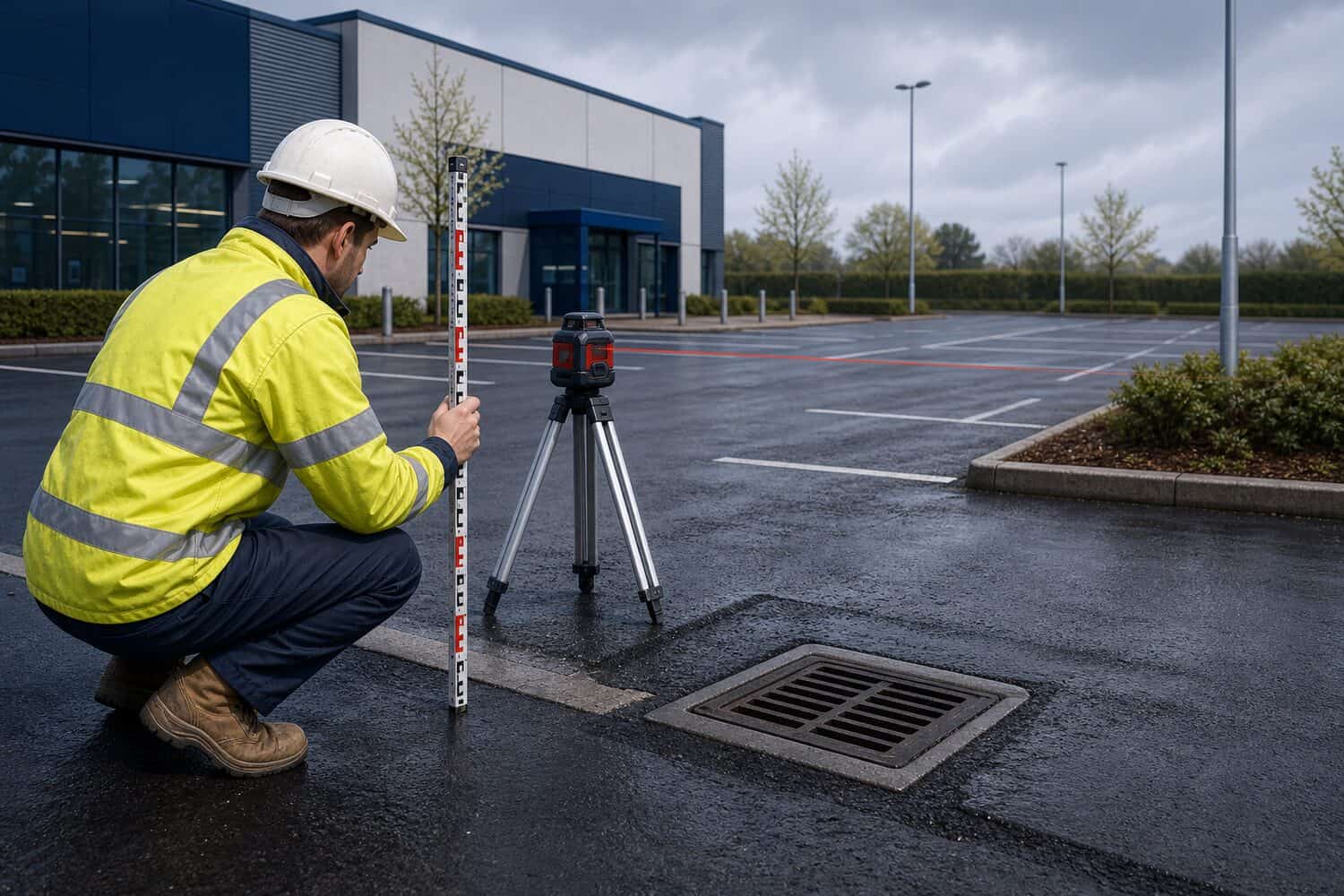
Water is the usual accelerator. If gullies silt up or falls no longer work, the surface stays wet, frets earlier and softens around ironwork. Our notes on drainage before resurfacing and why potholes keep coming back cover those failure patterns in more detail.
What extends it
Surfaces last longer when the construction matches the load and the site keeps water moving:
- Correct depth and method for the traffic, not the lightest treatment that looks neat on day one
- Sound base and local reconstruction where soft spots already exist
- Falls and outlets that still work after the finish
- Clear demarcation of delivery lanes, turning heads and pedestrian routes
- Routine cleaning of gullies and early repair of open joints or fretting
Built to last starts before the mat goes down. If the wrong layer is treated, the clock starts again sooner than it should.
Typical commercial lifespan ranges in practice
Exact years vary by site, so treat these as planning bands rather than guarantees:
- Light staff or visitor parks with good drainage: often longer service between major interventions
- Busy retail, school or estate parks: more wear at entrances, crossings and turning points
- Logistics, care home or delivery-heavy yards: the shortest life in the highest load zones unless construction depth matches the traffic
The useful management question is not "how long does tarmac last in theory". It is "which zones are already consuming repair budget and disrupting the site". That is when resurfacing, or local reconstruction, becomes cheaper than another winter of patching. See also repair or resurface and resurfacing versus reconstruction.
When to resurface before it becomes urgent
Bring resurfacing forward when you see several of these together:
- Repeated holes in the same places
- Growing areas of fretting or open texture
- Ponding that returns after every heavy rain
- Complaints about slips, trip hazards or messy appearance
- Patch repairs lasting only a short season
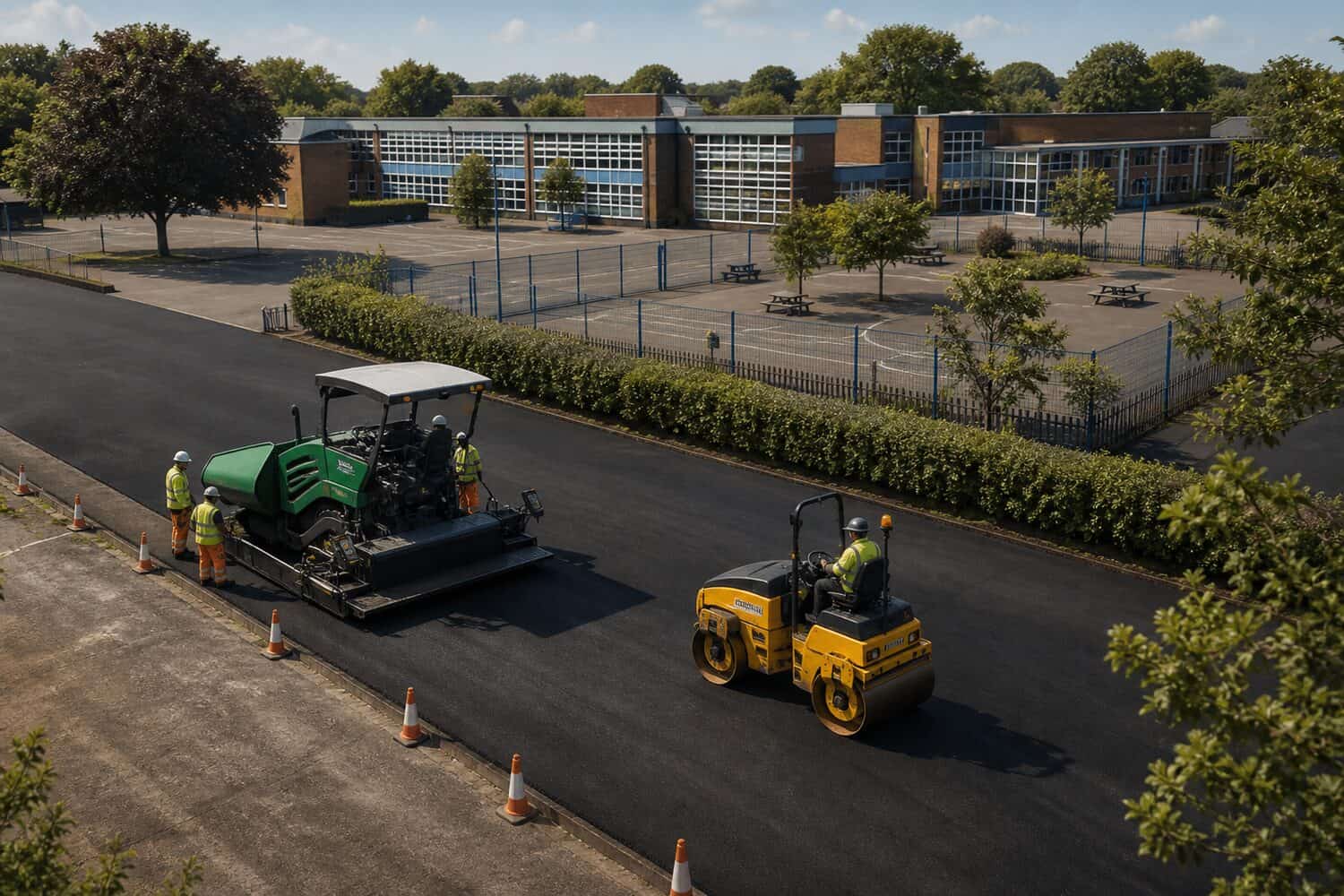
Waiting until the whole park is failing usually raises disruption and cost. Phased work can protect the busiest zones first while the rest of the site stays open. Our guide to phased resurfacing covers that route.
Frequently asked questions
How long should a commercial car park surface last?
It depends on base condition, drainage, traffic type and maintenance. A sound surface on firm ground with working falls can last many years. Soft ground, standing water or heavy turning traffic shortens that life, sometimes sharply in the worst zones.
Does tarmac always last longer than resin-bound surfaces?
Not as a blanket rule. Tarmac is usually the practical choice for heavy vehicles and working commercial parks. Resin-bound systems can suit lighter, more decorative areas, but the right answer still depends on load, drainage and maintenance expectations.
Why do some areas fail years earlier than others?
Entrances, delivery lanes, turning heads and wet corners take more stress. If those zones sit on weaker construction or poorer drainage, they fail first even when the quieter bays still look fine.
Can maintenance really extend lifespan?
Yes. Keeping gullies clear, sealing early fretting and fixing local soft spots before they spread protects the surrounding surface. Maintenance cannot rescue a failed base, but it does stop avoidable water damage.
When is full reconstruction better than another resurface?
When soft spots, pumping or deep repeating holes show the support layer has failed. Resurfacing over movement usually returns the same problem. Local reconstruction in those zones is often the durable answer.
Next step
Walk the site after rain, mark the zones that already fail first and get a survey that separates surface wear from base failure. That gives you a lifespan plan instead of another reactive patch list.
MAC Surfacing delivers car park resurfacing across the West Midlands and further afield with own crews, own plant and own planing, so drainage, local reconstruction and resurfacing can be planned as one accountable package. Protect your reputation and budget by replacing the right layer at the right time, not waiting until the whole park becomes urgent.