
One of the first questions after a resurfacing quote is almost always the same: how soon can cars go back on it? The honest answer is that it depends on the mix, the weather, the thickness and how the site will be used in the first hours and days. What does not change is this: opening too early can mark, scuff or damage a surface that would otherwise have been fine.
This guide is for facilities managers, landlords, schools and commercial site owners planning the reopen window. No prices here (always POA after survey). Just what usually governs when you can drive, park and put the site back into normal use.
Why there is no single universal reopen time
Fresh asphalt needs time to cool, firm and take traffic without deforming. Exact timing varies with:
- Mix type and binder
- Layer thickness
- Air and ground temperature
- Whether the area is shade or full sun
- Whether first use is light cars, delivery vans or heavier turning traffic
A warm afternoon, a thicker mat and tight turning into the same bay will ask more of the surface than a cool evening reopen for light parking. That is why a competent crew gives a site-specific window rather than a slogan.
What usually happens on commercial car parks
On many commercial parks the practical sequence looks like this:
- The surface is laid and compacted
- The crew protects the work while it cools
- Light access may return sooner than unrestricted parking
- Line marking and full public use follow once the surface is ready and the programme allows
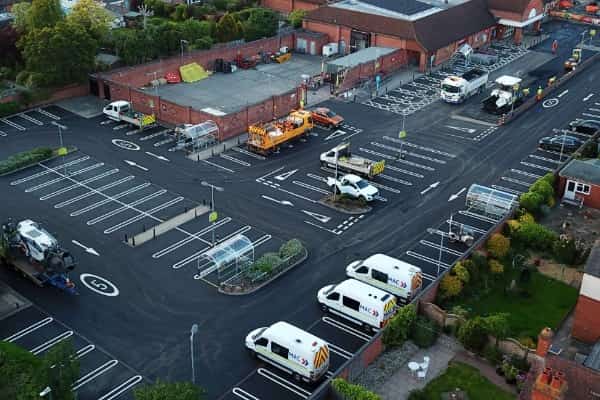
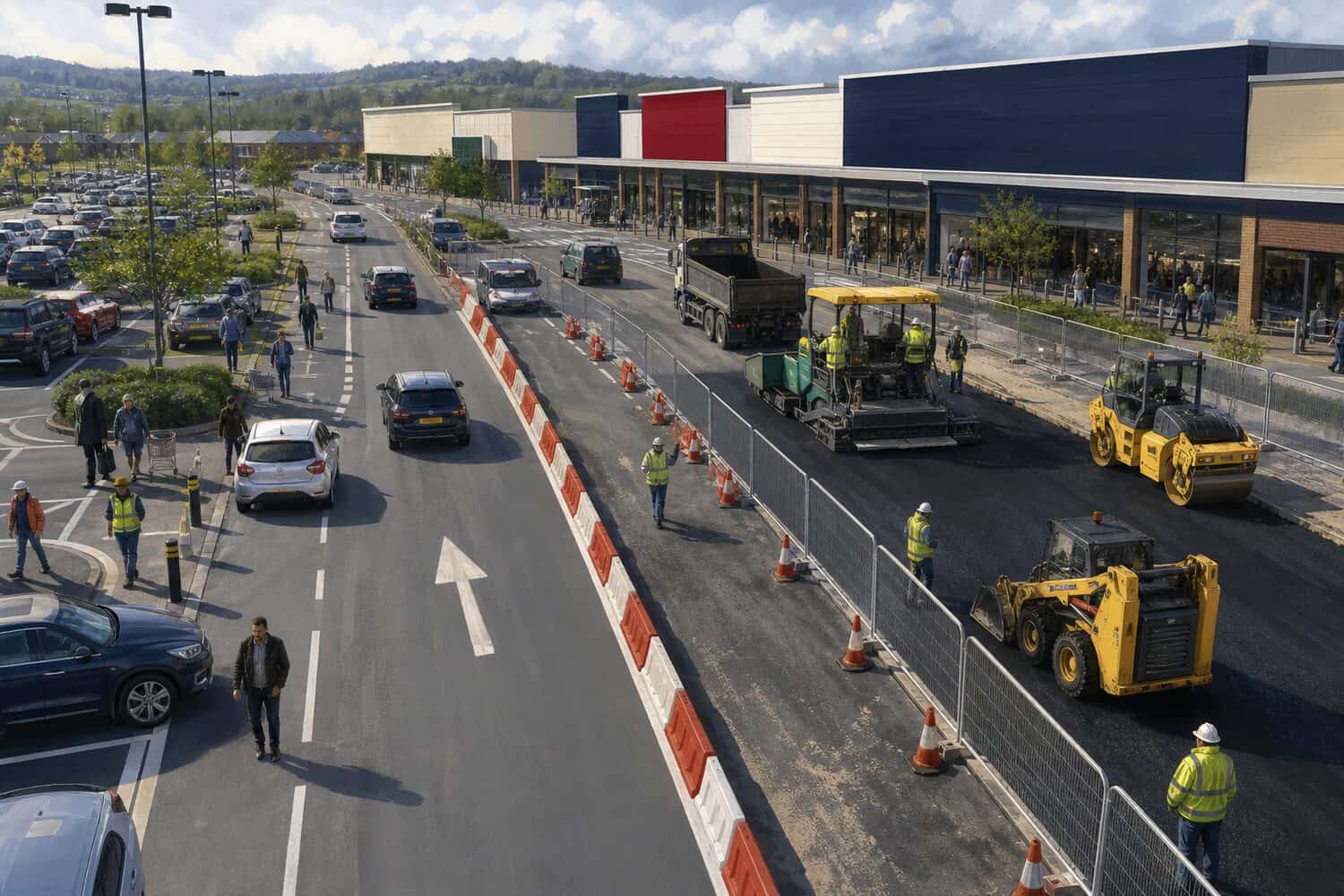
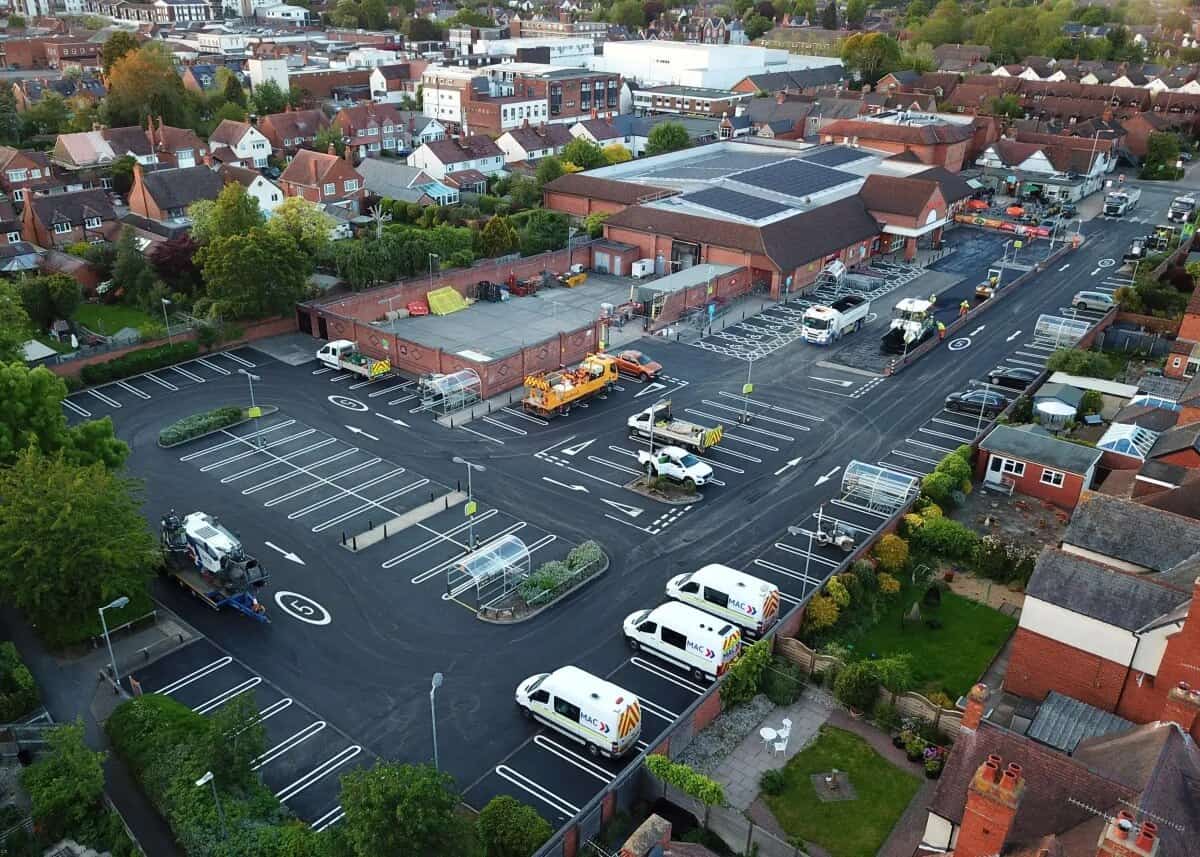
Some areas can reopen in phases. A completed wing can come back into use while another zone is still being laid, which is often the difference between a manageable programme and a full shutdown. If phased working is part of your plan, read that alongside our guide to car park resurfacing programmed around trading hours.
Opening too early: what goes wrong
The damage from an impatient reopen is usually quiet and expensive:
- Tyre marks and scuffing in soft areas
- Pushing and rippling where vehicles turn tightly while the mat is still warm
- Stone loss or surface disturbance under steering lock
- Markings applied or trafficked before the surface is ready to take them cleanly
Those defects then get blamed on the resurfacing, when the real issue was the first-use window. Protecting that window is part of buying a surface that lasts.
How to plan the first 24 to 72 hours
Good reopen planning starts before the first wagon arrives:
- Agree which zones can reopen first and which stay closed
- Keep heavy turning and delivery movements off the newest areas for as long as the crew advise
- Use temporary cones, barriers and signage that staff will actually obey
- Hold back non-essential deliveries that would cut across soft zones
- Confirm when markings go down and when those marked areas can take traffic
If the site cannot live with that discipline, the programme itself needs changing. A resurface that has to be driven on immediately in every direction is a different job from one that can be phased.
Weather changes the clock
Hot weather keeps the surface softer for longer. Cold weather can let light use return sooner, but it also changes laying conditions and curing behaviour. Rain around the works can affect programme, temporary access and when markings can go down cleanly.
Ask for the reopen advice in the forecast that is actually expected for the week of the works, not a generic rule from another site. The same mix can behave differently on a shaded north elevation and an open sunlit forecourt.
What to ask before you approve the programme
Before the date is locked, get clear answers to:
- When can light cars return to each phase?
- When can vans, refuse vehicles or other heavier movements return?
- Which turns and entrances are highest risk while the surface is young?
- When will markings be completed, and does that change access?
- What temporary route keeps the business open without chewing up the new work?
If those answers are vague, the programme is not ready. A resurface is only useful if the site can reopen in a controlled way.
Frequently asked questions
How soon can you drive on a newly resurfaced car park?
It depends on the mix, thickness, temperature and traffic. Light cars may return sooner than heavier turning movements. Ask for a zone-by-zone reopen window for your programme rather than a single site-wide rule.
Can part of the car park reopen while work continues elsewhere?
Often yes. Phasing by bay, wing or zone is one of the main ways commercial sites keep trading during resurfacing.
Does hot weather mean a longer wait?
Usually yes. Higher temperatures keep asphalt softer for longer, so first-use restrictions may need to stay in place for longer on warm days.
When do line markings go down?
After the surface is ready to take them. Marking too early, or trafficking marked areas too soon, can spoil both the lines and the surface.
What if we need emergency access overnight?
Tell the contractor before the programme is set. Emergency routes can often be planned, but they need protecting rather than left to chance.
Next step
Plan the reopen with the same seriousness as the resurfacing itself. The first traffic on the surface decides whether the finish stays clean.
MAC Surfacing delivers car park resurfacing across the West Midlands and further afield with own crews, own plant and own planing, so laying, phasing and reopen controls can be planned as one job. On commercial parks around the region, the programmes that work are the ones that protect the surface in the first hours as carefully as they plan the last wagon. Yours can be one of them.