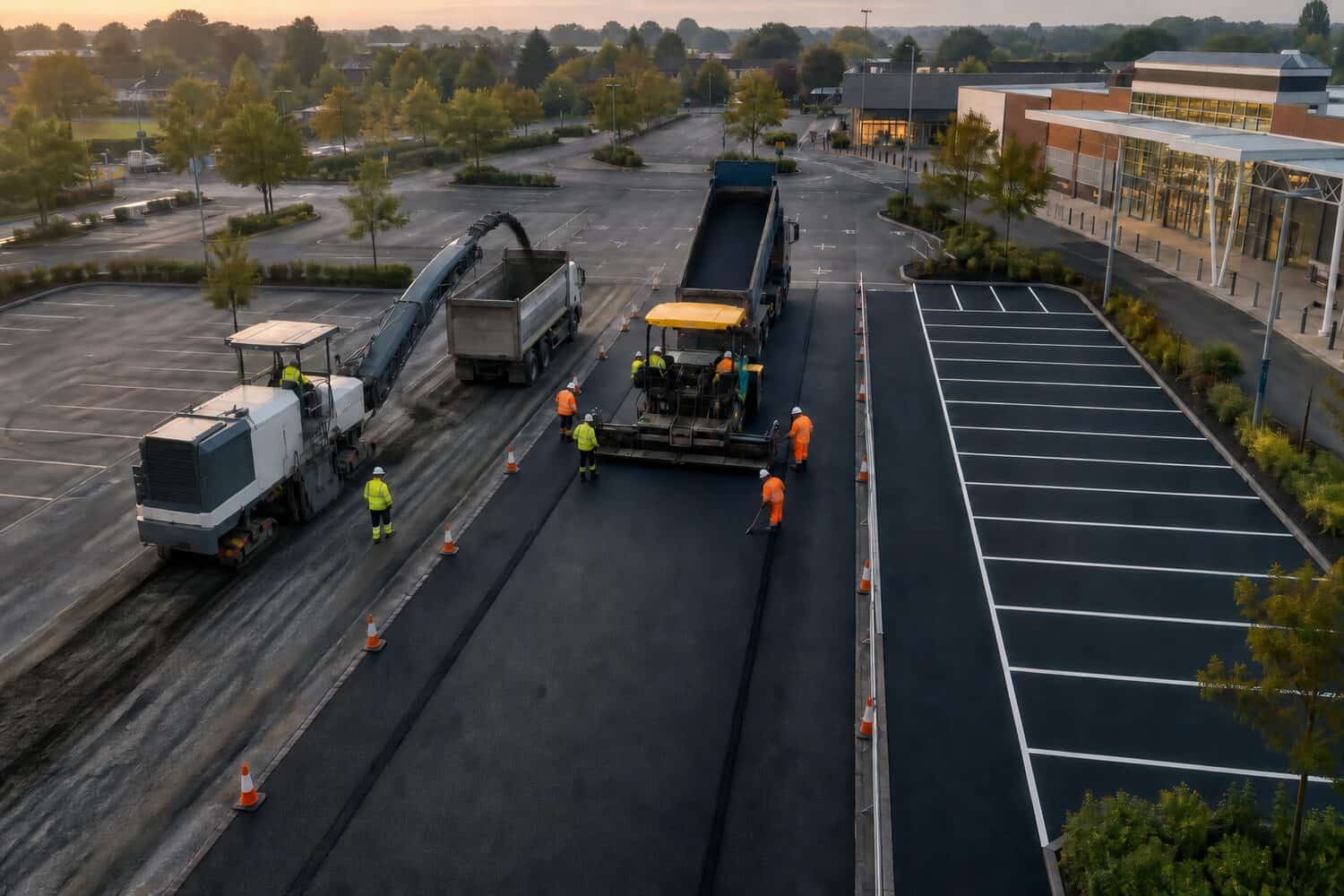

How long a car park resurfacing job takes depends less on the marketing brochure and more on area, access, drainage, phasing and weather. A small, empty park with clean falls is a different programme from a live retail site that has to stay open while soft spots are rebuilt.
This guide is for facilities managers, landlords and estate teams trying to set a realistic programme. No prices here (always POA after survey). Just the factors that govern duration, what can be phased, and how to ask for a timeline that will survive contact with the site.
What usually sets the clock
Duration is driven by:
- Total area and how many zones can be worked at once
- Whether the site must stay partly open
- Depth of planing and the amount of base repair needed
- Drainage or ironwork corrections
- Access for tippers, plant and materials
- Weather windows and reopen restrictions
Two parks of the same size can take very different lengths of time if one can close completely and the other has to keep trading through every phase.
A simple way to think about programme stages
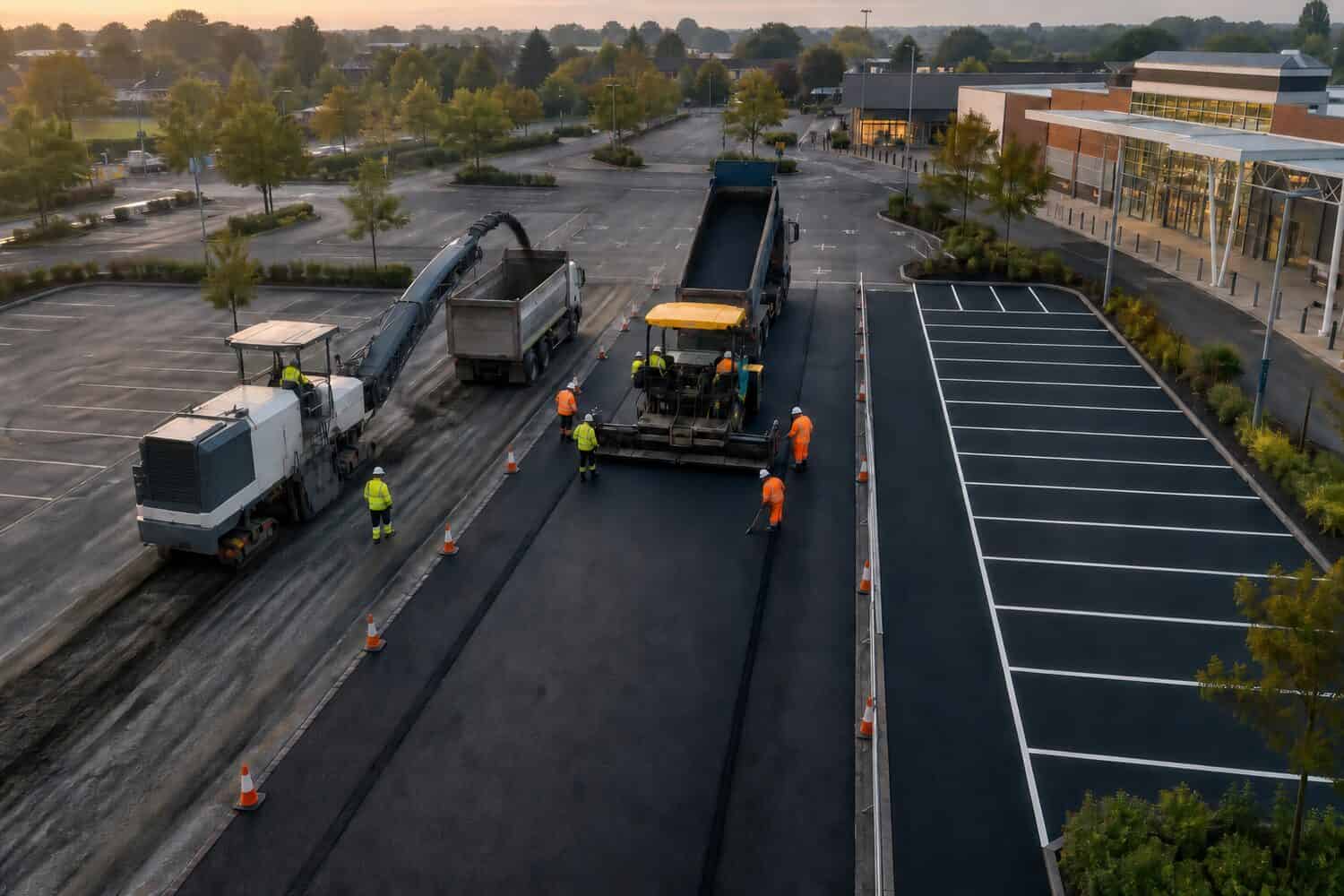
Most commercial resurfacing programmes move through the same stages, even when the calendar differs:
- Survey, scope and temporary traffic planning
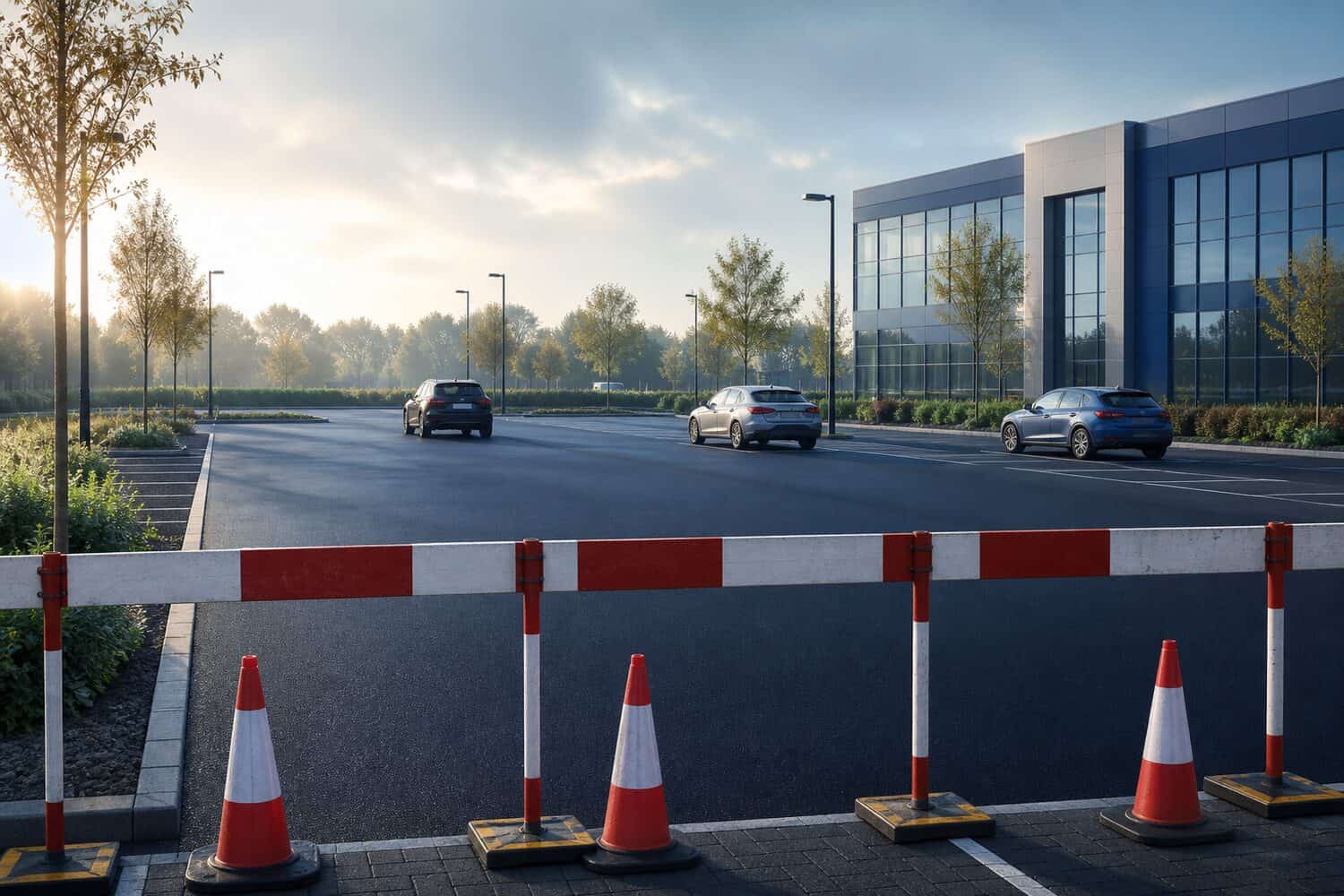
- Set-up, protection and zone closure
- Planing and removal
- Base and drainage repairs where needed
- Resurfacing and compaction
- Cooling, markings and controlled reopen
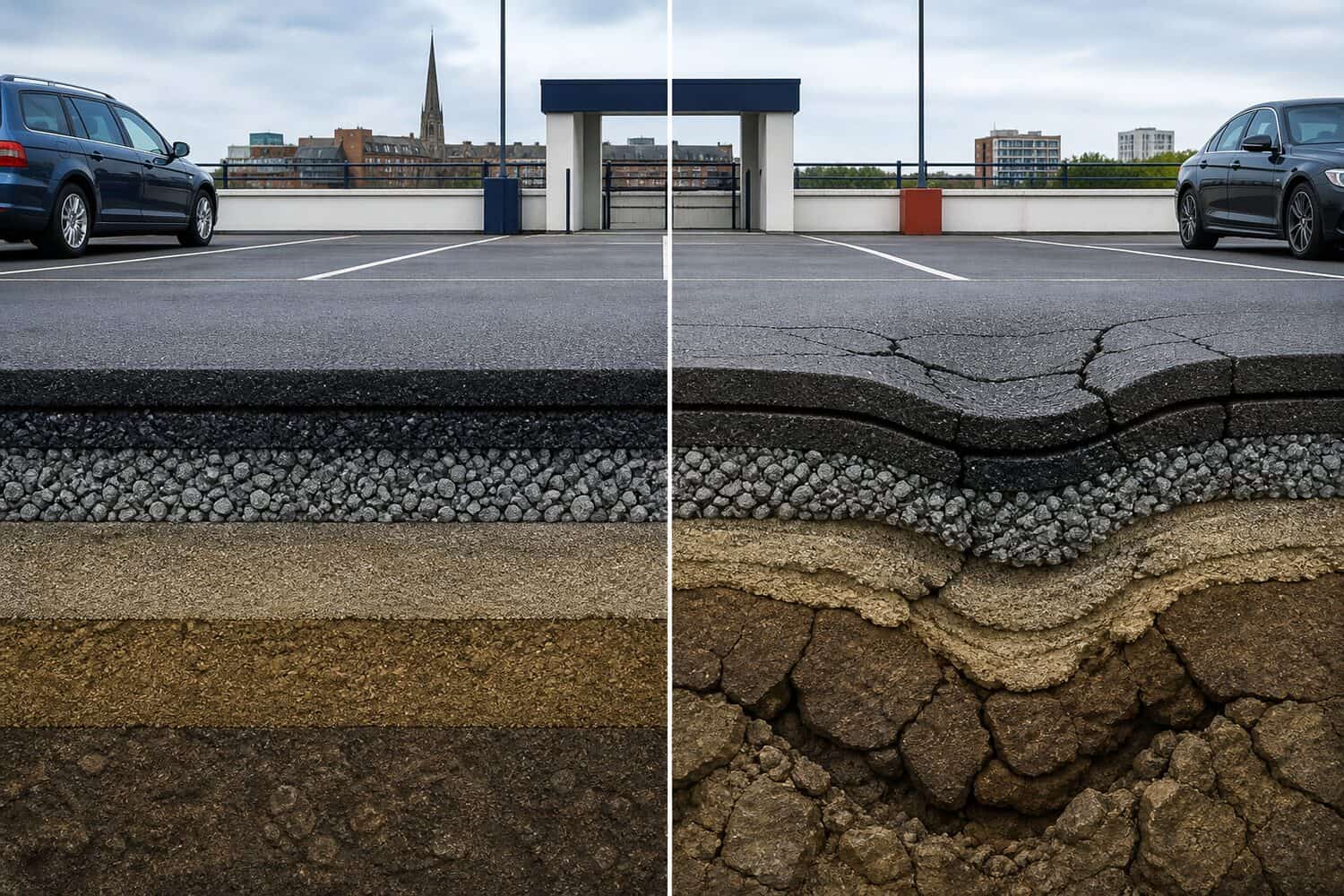
The visible laying day is only one part of that. If the site needs fall correction or soft-spot rebuilds, those sit in the middle of the programme and often decide the real duration.
Full closure versus phased working
A full or near-full closure is usually the shortest pure surfacing programme because the crew can work continuously. Phased working keeps the business open, but it often extends the calendar because:
- Zones are smaller
- Plant has to work around live traffic
- Each finished zone needs protecting before the next one starts
- Temporary routes and deliveries have to be reset between phases
Neither approach is automatically better. The right one is the one that matches trading needs and site layout. Our guide to phased resurfacing covers when keeping the site open is realistic.
Why surveys change the answer
A first guess based only on square metres is not a programme. Once the survey finds ponding, soft spots or failed ironwork, the duration changes. That is why honest timelines come after the site has been walked wet and dry, not before.
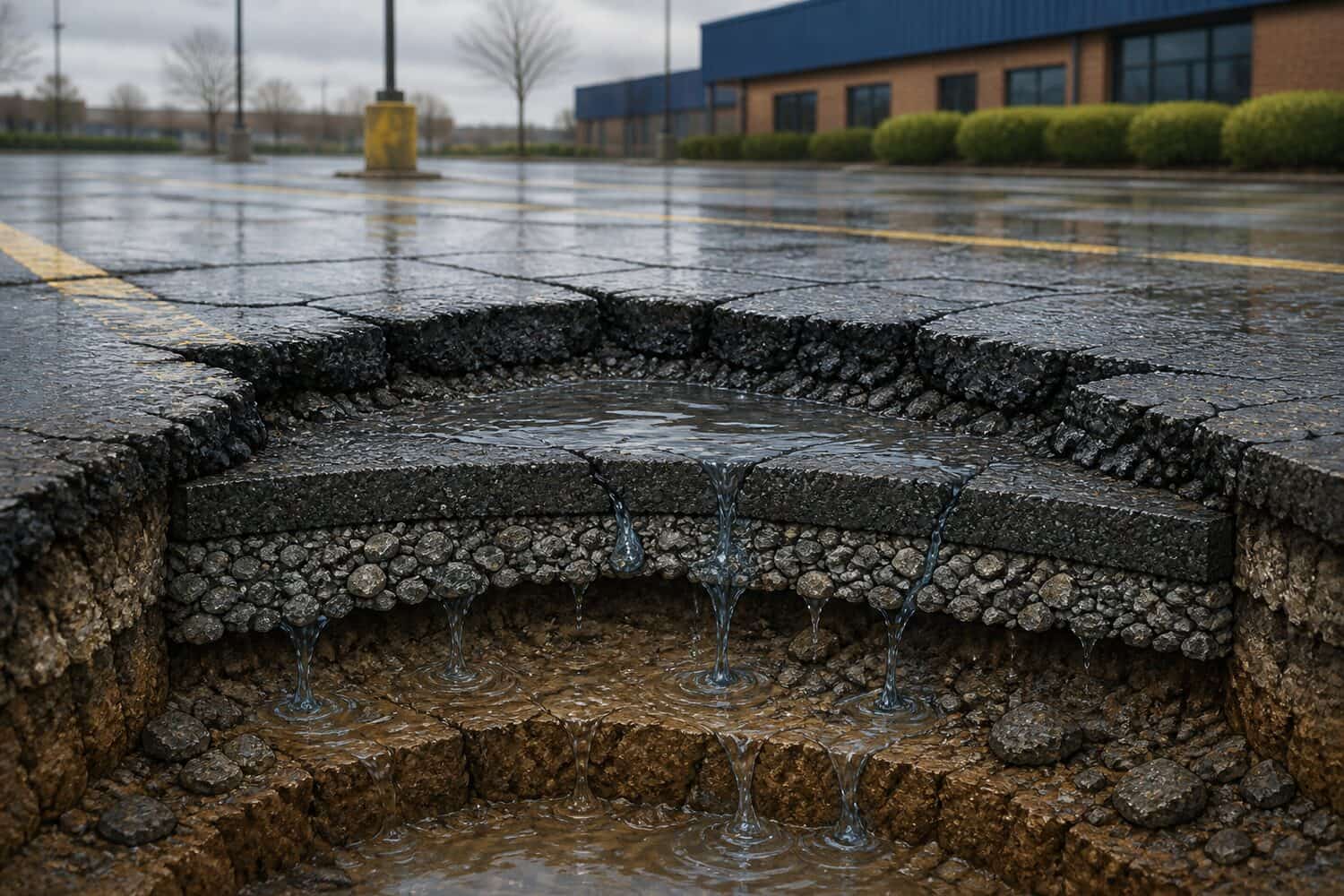
If standing water is already a known issue, read that against the drainage-before-resurfacing guide. Drainage correction can be modest and local, or it can become a major part of the works.
What a useful programme answer looks like
Ask for a timeline that states:
- How many phases
- What remains open in each phase
- Which days are planing, repair and laying
- When markings happen
- When light cars and heavier movements can return
If the answer is only “a few days”, push for the assumptions underneath it. Area alone is not enough. Access, repairs and reopen controls belong in the same conversation.
How to shorten the disruption without rushing the work
The fastest safe programmes usually share the same habits:
- Clear decisions before the first wagon arrives
- Honest temporary routes that staff will follow
- Enough room for tippers and materials
- Weather-aware planning rather than wishful dates
- Reopen discipline so early traffic does not damage finished zones
Rushing the reopen is one of the easiest ways to turn a short programme into a longer defect conversation. See how soon you can drive on a new surface.
Frequently asked questions
How long does commercial car park resurfacing take?
It depends on area, access, repairs, phasing and weather. A small closed park can be much quicker than a live trading site that has to be completed in zones.
Can the work be done overnight or at weekends?
Often yes, where noise, access and logistics allow. Night and weekend working can reduce daytime disruption, but they need planning as carefully as a weekday programme.
Does drainage repair make the job much longer?
It can. Local fall or gully corrections may add little time. Wider soft-spot and drainage rebuilds can become a major part of the programme.
Will the whole car park have to close?
Not always. Many sites can keep partial access through phased working if the layout allows it.
When should we lock the date?
After survey and temporary traffic planning are clear enough to produce a phase plan, not after a square-metre guess.
Next step
Get the survey, decide whether the site can phase or needs a quieter closure window, and ask for a programme that states what stays open and when each zone reopens.
MAC Surfacing delivers car park resurfacing across the West Midlands and further afield with own crews, own plant and own planing, so survey, phasing and delivery can be planned as one accountable programme. On commercial parks around the region, the timelines that hold are the ones built around the real site, not a generic duration. Yours can be one of them.