
Non-slip car park surfacing is not a marketing finish. It is a practical decision about how people walk, turn and brake on a wet site. Get it wrong and the surface looks fine on a dry afternoon, then becomes a complaints and liability problem the first time it rains.
This guide is for facilities managers, landlords, schools and commercial site owners deciding when slip resistance matters enough to change the specification. No prices here (always POA after survey). Just where non-slip detailing earns its keep, where standard asphalt is enough, and what to ask before the work is locked.
When slip resistance should be on the table
Every outdoor car park gets wet. That alone does not mean every bay needs a specialist non-slip system. The case gets stronger when one or more of these are true:
- Heavy pedestrian movement across the parking surface, not just from bay to kerb
- Ramps, slopes, deck approaches or cambers where water sheets rather than drains
- Shaded areas that stay damp, freeze earlier and polish under traffic
- Care homes, schools, clinics or retail sites where visitors are less sure-footed
- Existing incident history: slips, near misses, staff complaints or insurance notes
If the surface is flat, drains well and pedestrians mainly use marked walkways, a correctly specified and marked asphalt resurface may be enough. If people cross live vehicle areas in the wet, treat slip resistance as a design issue, not an afterthought.
What "non-slip" usually means on a car park
On asphalt car parks the useful conversation is rarely about a novelty coating. It is about texture, drainage, markings and the areas where feet and tyres actually meet water:
- Surface texture that keeps micro-grip after rain rather than polishing smooth
- Falls and drainage that stop water sitting in pedestrian desire lines
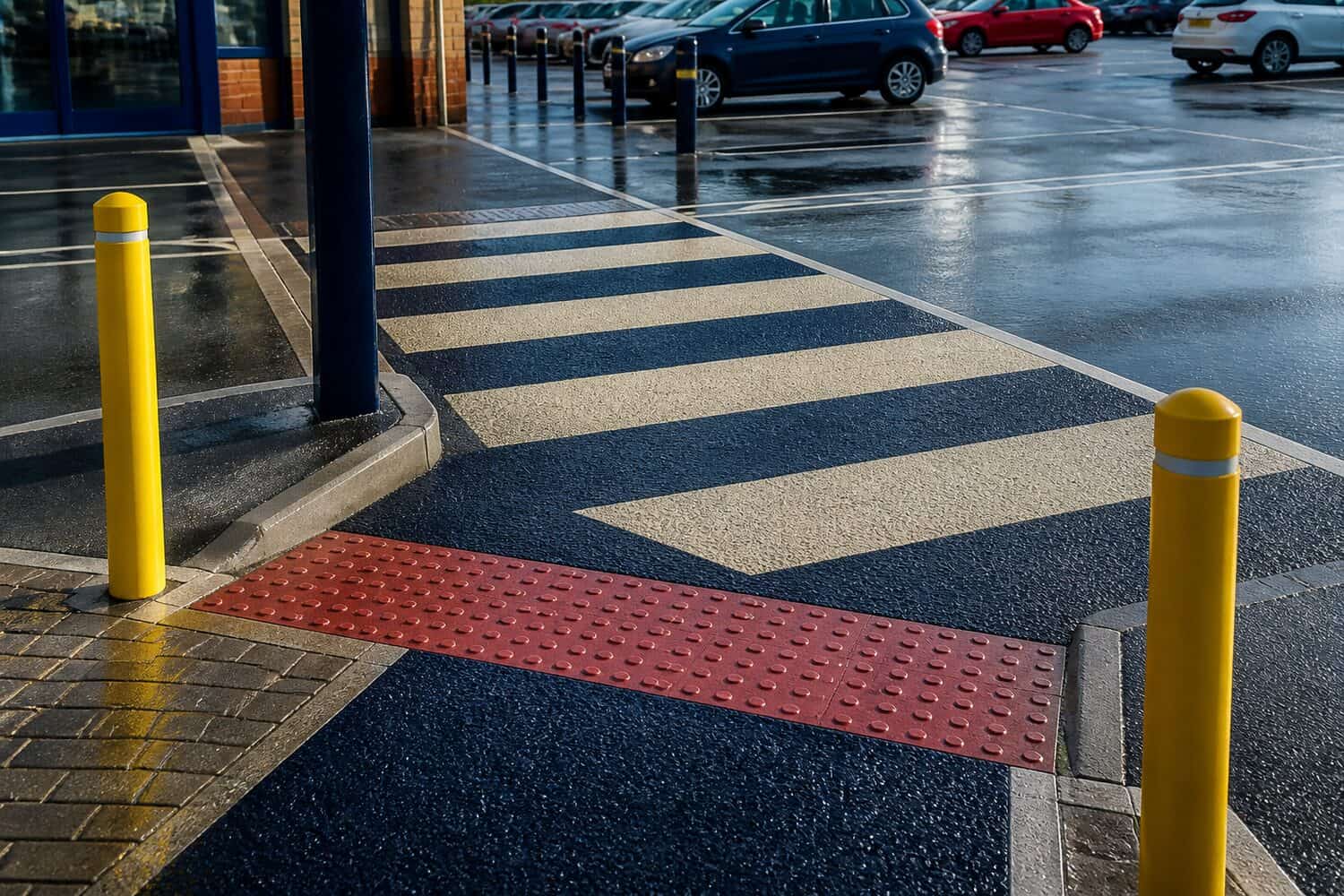
- Local treatments on ramps, crossings and entrance thresholds where risk concentrates
- Clear markings that keep pedestrians out of the wettest vehicle tracks where possible
A glossy looking finish can photograph well and still be the wrong answer. The surface has to work when it is dirty, wet and under repeated turning traffic.
Standard resurfacing vs targeted anti-slip detailing
Not every car park needs the same treatment across every square metre. A practical split looks like this:
- Standard resurfacing for the main carriage and bay areas where drainage is sound and pedestrian demand is low
- Higher-texture or treated zones for ramps, crossings, trolley routes, school drop-offs and building thresholds
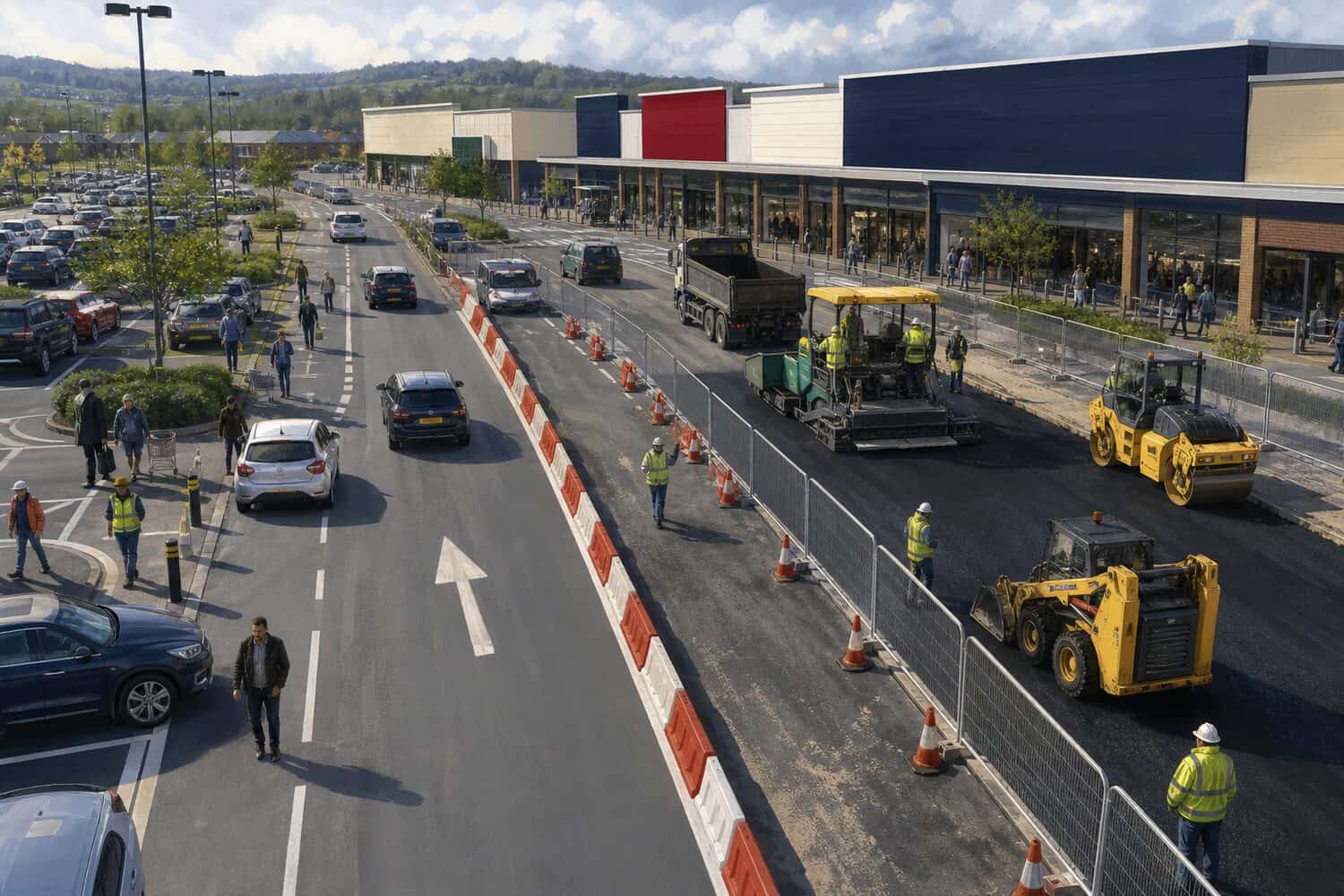
- Layout changes when the real problem is people being forced to walk through live, wet vehicle paths
That is usually better value than treating the whole park as if every bay carries the same slip risk. It also keeps the specification tied to the way the site is used, which is what matters after handover.
Drainage and falls beat coatings that fight water
Many "slippery car park" complaints start as drainage complaints. If water ponds across a pedestrian route, no surface texture will make that feel safe for long. Before specifying a special finish, check:
- Whether falls still take water to gullies
- Whether gullies are blocked, sunken or in the wrong place
- Whether the polished or fretting surface is holding water in wheel tracks
- Whether shade or building run-off keeps one zone permanently wet
Fixing falls and opening the surface up properly is often the highest leverage anti-slip move available. Our guide to why new surfacing cracks, patches or ponds covers what happens when those basics are skipped.
How to brief the work without over-specifying
A useful brief tells the contractor where people walk, where water sits and where incidents have happened. Ask for:
- A walk of the wet-weather desire lines, not just a dry daytime survey
- Clear zones: standard surface, higher-risk treated areas, pedestrian priority routes
- How the surface will drain after the works
- How markings will reinforce safe routes rather than decorate failed ones
- What maintenance the chosen finish needs after the first winter
If a contractor can only talk about product names and not about slopes, pedestrians and water, keep asking. The site problem is physical, not branding.
Where non-slip surfacing is usually not the first fix
Non-slip detailing is the wrong first spend when:
- The surface is failing structurally and needs proper prep, not a thin grip layer
- Ponding is caused by collapsed falls or blocked drainage
- Pedestrians are crossing live traffic because the layout has no safe route
- The complaints are really about potholes, loose chippings or unmarked bays
In those cases start with the repair or resurface decision, then decide which zones need extra grip once the base and drainage are honest.
Frequently asked questions
Do all car parks need non-slip surfacing?
No. Many sites perform well with a correctly specified asphalt resurface, good drainage and clear markings. Extra slip-resistant detailing matters most on slopes, crossings, thresholds and high-footfall wet zones.
Is a coating the same as a non-slip resurfacing specification?
Not necessarily. Some sites need local treated zones; others need the whole resurfacing specification and drainage correcting. The right answer depends on traffic, slope and where people walk in the wet.
What causes a car park to become slippery after rain?
Common causes are polished texture, standing water, algae in shaded damp zones, and pedestrian routes that cross sheeted water or turning tracks. Texture alone will not fix a drainage fault.
Can non-slip treatment be phased?
Yes. Many programmes resurface the wider park and then concentrate higher-grip detailing on the risk zones, or phase both by area so the site stays open.
What should I ask a contractor before approving the finish?
Ask where pedestrians walk in the wet, how water will leave the surface, which zones get higher texture or treatment, and what the finish will need after winter. Product names are secondary to that.
Next step
Walk the site as it behaves in wet weather, mark the desire lines, and decide whether the risk is everywhere or concentrated. Then specify the surface around that map.
MAC Surfacing delivers car park resurfacing across the West Midlands and further afield with own crews, own plant and own planing, so drainage, texture and markings can be planned as one accountable finish. On schools, clinics and commercial parks around the region, the surfaces that stay safe are the ones designed for wet feet as well as dry cars. Yours can be one of them.