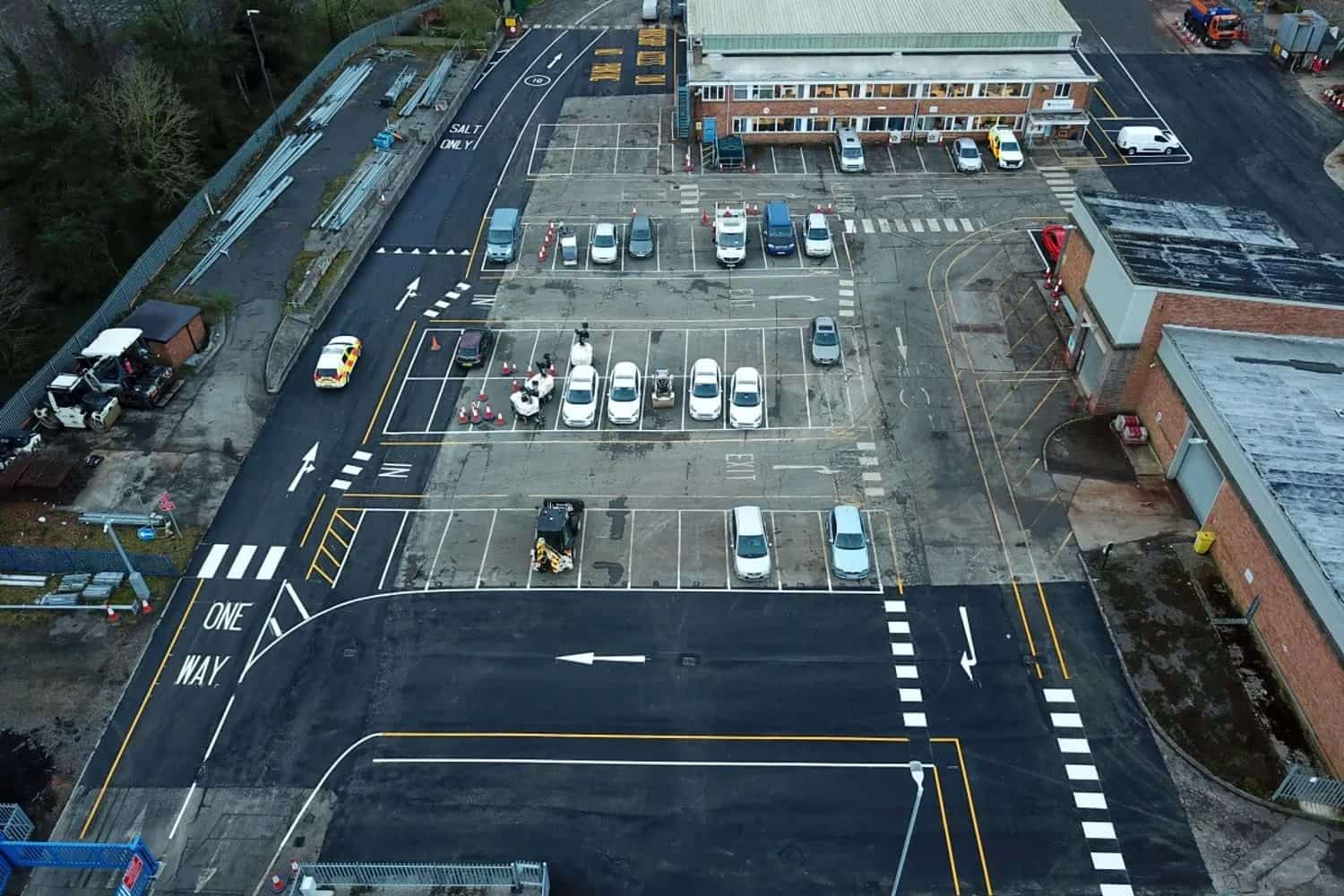

Ask ten contractors what a commercial car park resurfacing job costs and you will get ten different answers. That is not always somebody trying it on. Two car parks the same size can need very different work, and most of what moves the number sits under the surface or around the edges of the site.
This guide is for facilities managers, landlords, estate teams and business owners who want to understand a quote before they sign it. No prices here (always POA after survey). Just the factors that drive car park resurfacing cost, why quotes differ, and what to ask so you are comparing like with like.
The honest answer: it depends, and here is on what
The main drivers of commercial car park resurfacing cost are:
- Area, and how easily plant and wagons can get in and out
- Condition of the existing surface and the base underneath it
- Whether the job is an overlay, an inlay or a full reconstruction
- Planing depth and how much waste has to leave site
- Drainage and levels
- Material specification
- Line marking and signage
- Traffic management and phasing, including out of hours working
- Location and mobilisation
Square metres matter, but on their own they are a poor guide.
Area and access
Bigger areas usually cost more in total, but not in a straight line. Larger jobs let a crew work continuously, while small jobs still carry the full cost of getting a wagon, plant and a gang to site. That is why a small patch of car park rarely comes in as cheaply as people expect.
Access can matter as much as area. Narrow entrances, low barriers or tight turning can rule out larger machines and change the whole method. In our experience you do not really know what tight access means for a job until someone has stood on site and looked at it. We have priced work from the area alone, then looked at the address and found we could not get a machine in. The price had to move.
Condition of the surface and the base
This is the biggest swing factor, and the one a desktop quote cannot see. The options usually fall into three broad routes:
- Overlay: a new layer over a sound existing surface, where levels allow it
- Inlay: plane off the worn surface and lay new material back to the same level
- Full reconstruction: dig out and rebuild failed base before surfacing
Soft spots and areas that have moved usually point to the base, not the top layer. Resurfacing over a failed base looks fine for a while, then fails again. See repair or resurface and resurfacing versus reconstruction for how to tell which route you need.
Planing depth and waste removal
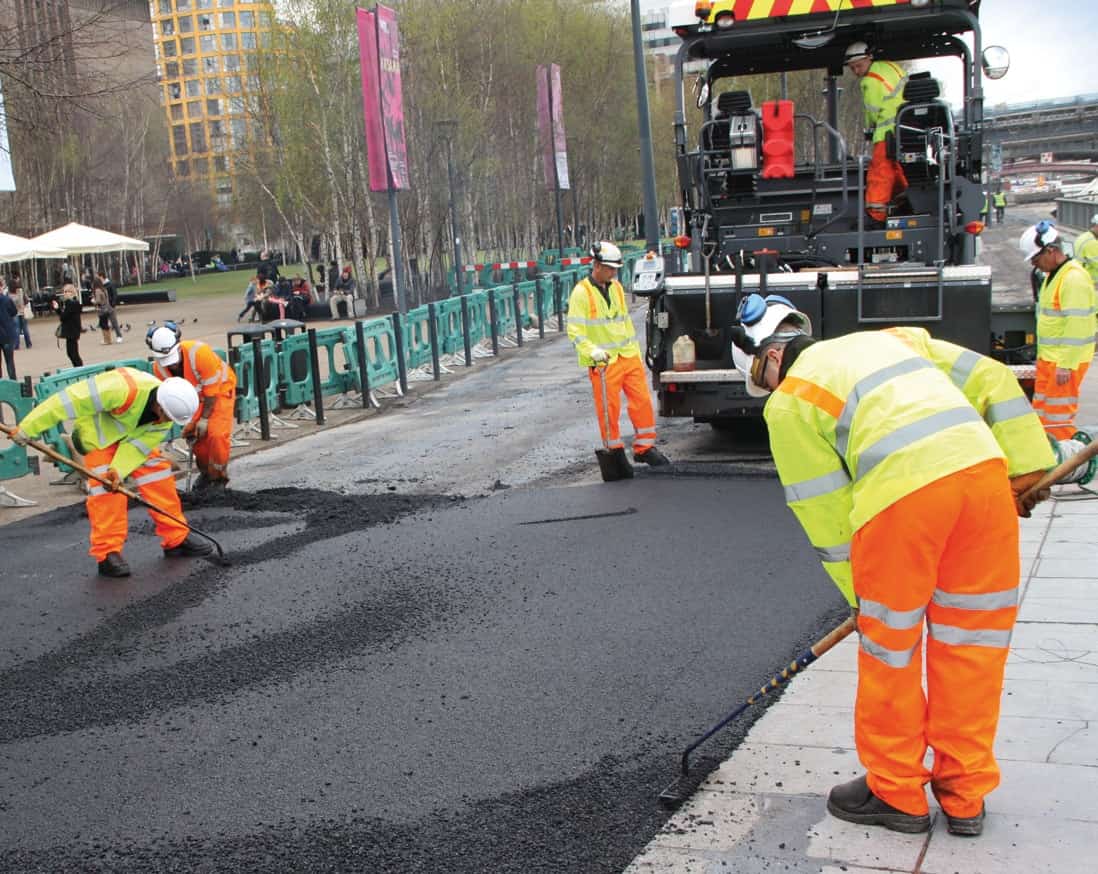
Most car park resurfacing starts with planing the old surface off. The deeper the cut, the more machine time, the more wagons and the more material to take away.
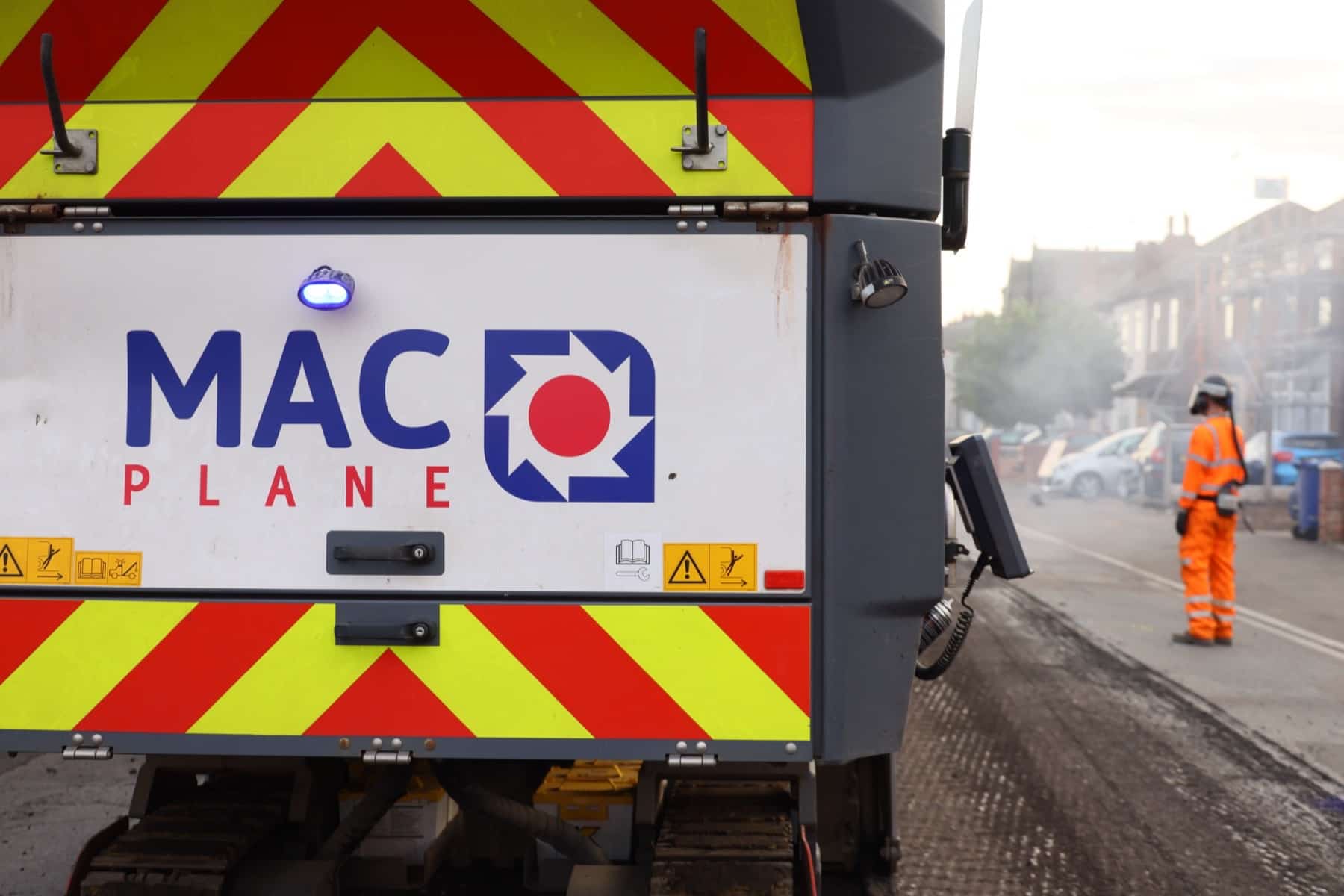
Planings are not just waste. Ask how a contractor handles them, including recycling. MAC runs its own road planers and supplies recycled road planings, so planing and removal are planned as part of the same job rather than handed to someone else.
Drainage and levels
Water is what kills most car park surfaces. Ponding might need a small fall correction around a gully, or new drainage and reshaped levels across a whole area. Both are cheaper to deal with before the new surface goes down than after.
Material specification
The material and layer thickness should follow the traffic: cars only is a different spec from delivery lorries, refuse wagons or buses. Porous, coloured or higher slip resistance surfaces all change the specification. A good quote states what is being laid, how thick and where, so you can see whether two prices are for the same thing.
Line marking and signage
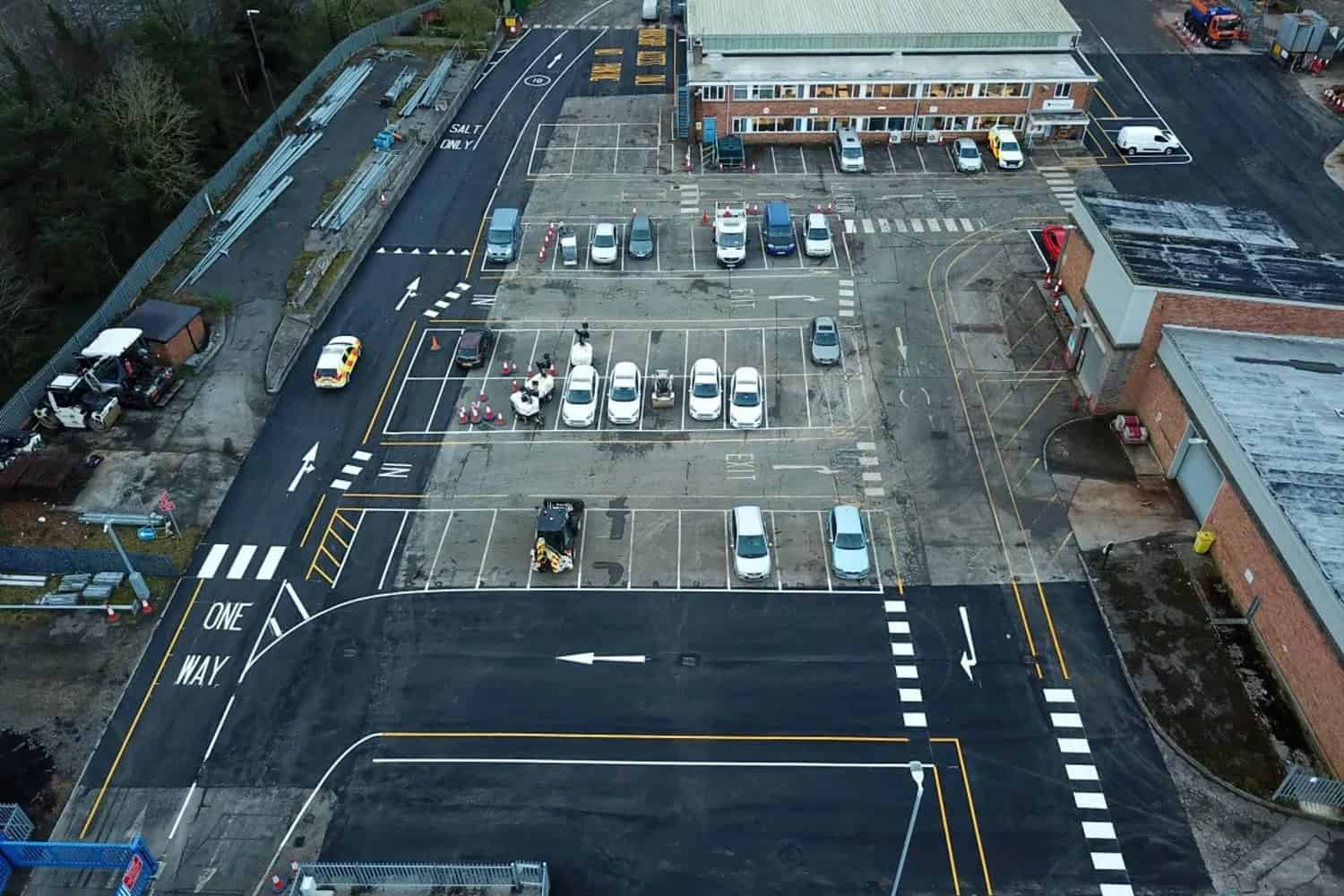
Bay lines, accessible bays, arrows, hatching, pedestrian routes and signs are easy to leave off a quote. Check whether markings are included and whether the layout is changing.
Traffic management, phasing and out of hours working
A car park that can close completely is the simplest job. Most commercial sites cannot. Supermarkets, yards, hospitals and schools in term time often need part of the park open.
Keeping a site live means smaller working zones and crews working around the public. We treat a live site as harder than tight access, because the constraints never go away. Night and weekend working can cut disruption, but the uplift lands mostly on labour. Formal traffic management on a public road is a separate item. See phased car park resurfacing for how this is planned.
Location and mobilisation
Distance from the depot and an asphalt plant affects haulage and laying temperature. Every job also carries a fixed cost to get people, plant and wagons to site, so combining areas into one visit often gives better value.
Why quotes for the same car park differ
When quotes are far apart, the contractors are usually pricing different jobs.
In our experience, three things move a car park price more than anything else: access, working hours and what is already underneath. Access decides which machines we can get on site and how much has to be done by hand. Working hours decide whether we can run full shifts or have to work around a site that stays open, at nights or weekends. The existing base decides whether an overlay will do the job or whether parts need full reconstruction. If a quote does not say how it has dealt with all three, treat that as the warning sign. That is usually the one that grows once work starts.
We would rather be straight with people about what drives the number than hide it. Most buyers already have a rough idea of the market, so the useful thing we can do is explain the assumptions behind a price. Our guide to comparing surfacing quotes goes through what to line up side by side.
What to ask a contractor before you accept a quote
- Has someone surveyed the site, or is this priced from a drawing or the area alone?
- Is this an overlay, an inlay or reconstruction, and why?
- What planing depth and layer thicknesses are allowed for?
- What happens if base failure or drainage problems turn up once the old surface is off?
- Are markings, signage, waste removal and traffic management included?
- How will the site stay open, and is any night or weekend work priced in?
- Are your own crews and plant doing the work, or is it subcontracted?
The question we wish more clients asked is simple: are these quotes actually like for like? Too often we are compared apples to oranges. When one price is a lot cheaper, it is usually because the spec is not the same or the risk has not been priced in. We run management systems, carry proper insurance and work to safety protocols that protect our workforce, and they protect the client too if there is ever an accident on their site. Ask every contractor what spec they have priced and what happens if something goes wrong.
A wider checklist is in how to choose a reliable surfacing contractor.
Frequently asked questions
Which details should two car park quotes share before you compare them?
Area, access, base condition, planing depth, drainage, material specification, markings, phasing and location. Survey first, then compare quotes on the same scope.
Why is a small car park job not proportionally cheaper?
Every job carries fixed costs for plant, wagons, crew and set up. On a small area those costs are a bigger share of the price.
Why does a desktop quote for a car park usually change?
Access, base condition and drainage change the job, and they are only clear once someone has walked the site. A figure from the area alone is a rough guide, not a scope.
Next step
Get a survey that looks at base, drainage, access and how the site trades, not only the square metres. Then ask each contractor to price the same scope so you can compare properly.
MAC Surfacing delivers car park resurfacing for commercial sites and facility and estate teams across the West Midlands and further afield, with own crews, own plant and own planing. You can see one example in our car park planing case study. When you are ready, get in touch to arrange a site visit.